


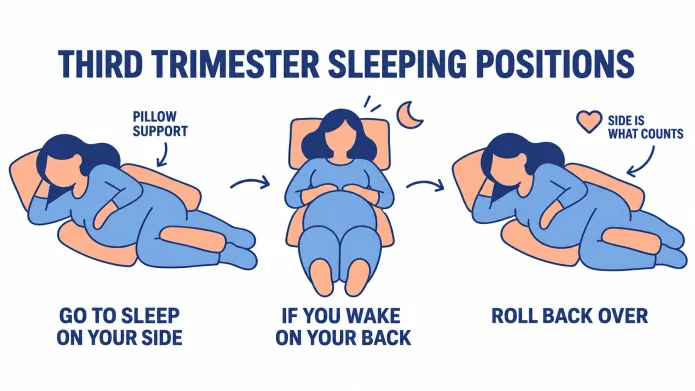
The line on the leaflet is short “From 28 weeks, go to sleep on your side.” It’s the going-to-sleep part that gets lost.
Somewhere between the antenatal class and the third night of waking up flat, that sentence turns into “never be on your back”, and a lot of pregnant women end up frightened of something the advice never said.
So this is the leaflet with the missing half put back in what the side-sleeping rule actually covers, why it exists, which side, how to stay there, and what to do when your body ignores all of it at 3 am.
Is It Dangerous To Wake Up On Your Back In Pregnancy?
No, as far as anyone has been able to measure. The studies behind the advice asked women which position they went to sleep in. They didn’t, and couldn’t, track what happened after that. Everyone moves in their sleep, and a heavily pregnant body moves more than most.
If you wake on your back, turn onto your side and go back to sleep. That’s the entire instruction. Midwives give it the same way, and none of them will tell you that a stretch on your back while asleep did anything to the baby. What you can control is the position you settle into when you close your eyes, and that’s what the rule is about.
Why Do Midwives Say Sleep On Your Side From 28 Weeks?
Because of a pattern that showed up in several countries at once. Studies in the UK, New Zealand and Australia were combined in 2019 into one analysis covering just over 1,000 late stillbirths.
Women who went to sleep on their backs in the third trimester had about 2.6 times the risk compared with women who went to sleep on their side. The UK study in that group, run across the Midlands and the North of England, is why the charity Tommy’s started its Sleep On Side campaign, and why the NHS repeats the message.
Two things to keep in proportion:
- The starting risk is low. Multiplying a small number gives you another small number, which is still worth acting on and isn’t worth losing sleep over.
- The advice applies to going to sleep, from 28 weeks, for daytime naps as well as nights.
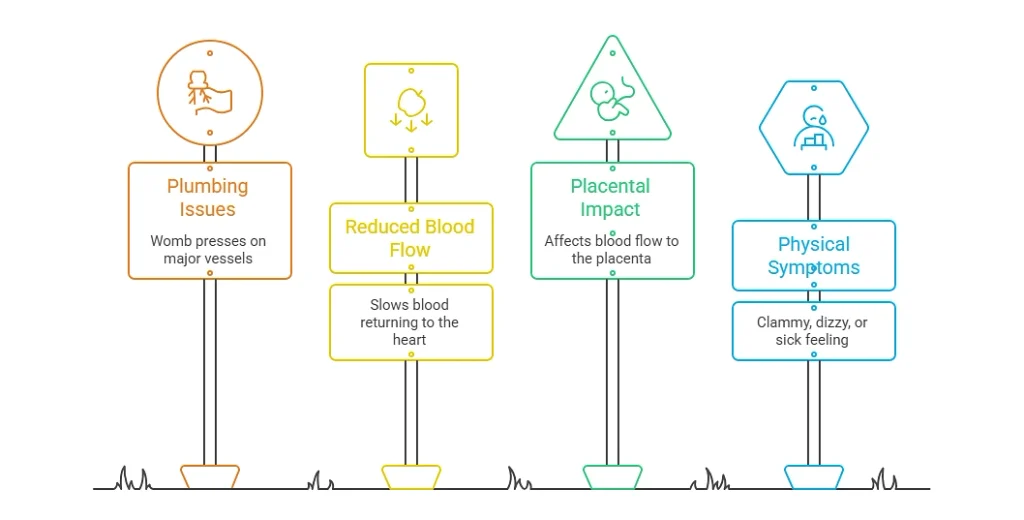
The reason is mostly plumbing. By the third trimester the womb is heavy enough that, when you’re flat, it sits on the large vein and the artery that run up the back of your abdomen.
That slows the blood coming back to your heart, and so the blood going out through the placenta. On your side the weight tips off those vessels. Some women feel it happen: a couple of minutes flat and they go clammy, dizzy or sick. That’s the same squeeze, and it’s a good prompt to turn.
Which Side Should You Sleep On, Left Or Right?
Left gets the reputation. The big vein sits a little to the right of the spine, so lying on the left keeps the womb furthest from it. If the left suits you, use it.
But the stillbirth research found no difference between left and right, and Tommy’s says either is fine. Side is what counts. Left or right is comfort. When the left hip has had enough, roll to the right without a second thought.
How Do You Stay On Your Side All Night?
You can’t police yourself while you’re unconscious, but you can make rolling flat awkward enough that you either don’t manage it or wake when you try.
- A pillow wedged along your back, so rolling onto it feels wrong.
- A pillow between the knees, which also does more for hip and lower back pain than anything else here.
- A small cushion or folded towel under the bump so it isn’t pulling on your side.
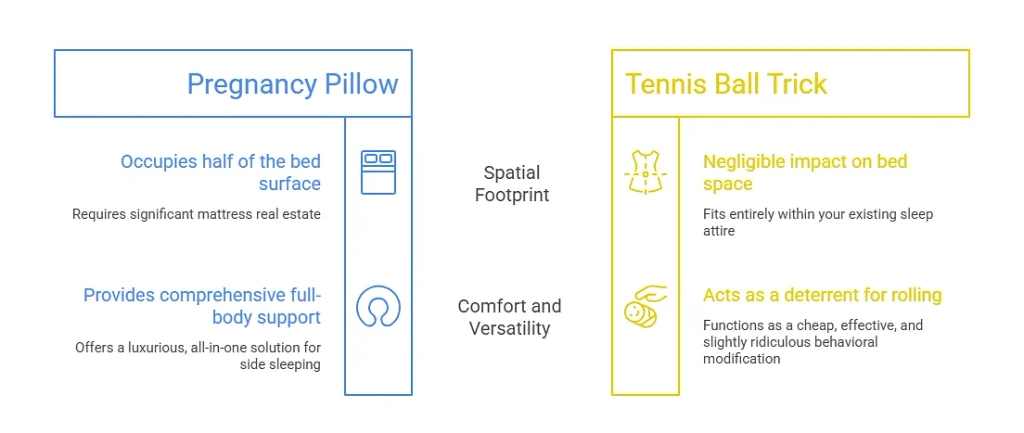
- A full-length pregnancy pillow, the C or U shape, if you’d rather have it all in one piece. It eats half the bed, and most people who buy one won’t give it up.
- A wedge behind you if lying fully on your side hurts. Being tilted even 20 to 30 degrees off flat takes the weight off the vessels.
- The old snorer’s trick: a tennis ball sewn into the back of a T-shirt. Ridiculous, cheap, effective.
The sofa counts as well. If you doze off in front of the television in the evening, curl onto your side rather than lying flat with your feet up.
What Should You Do The Moment You Wake Up On Your Back?
- Roll onto your side, whichever is nearer.
- Push the pillow back behind you.
- Go back to sleep.
- Leave the phone where it is.
If it’s happening most nights and it’s on your mind, bring it up at your next appointment so the midwife can say the above to your face. If you wake feeling faint, sick or short of breath, turning onto your side should sort it within a minute or two. If it doesn’t, or it keeps recurring, ring the maternity unit.
Why Is Sleep So Bad In The Third Trimester Anyway?
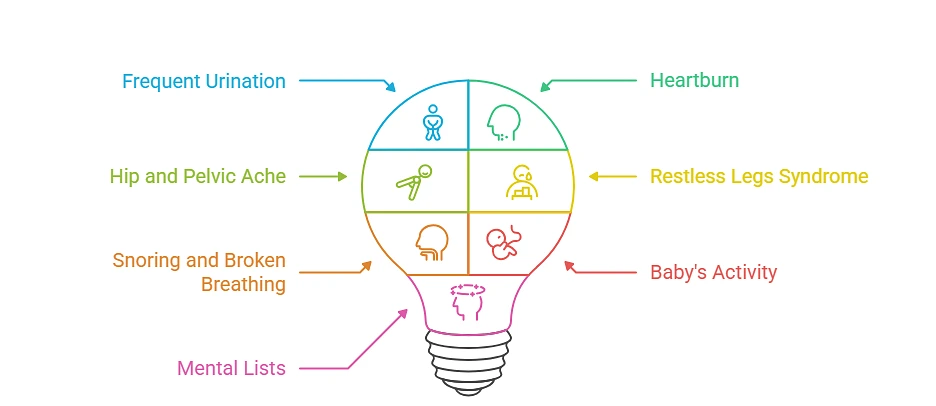
Nearly everyone sleeps badly in the last weeks, and the back-sleeping worry lands on top of all of it.
- Up two, three, four times a night for the loo, because the baby’s head is resting on your bladder.
- Heartburn the second you lie down, with your stomach pushed up under your ribs.
- Hip and pelvic ache from hours on one side.
- Restless legs, which bother roughly 1 in 5 women by this stage.
- Snoring and broken breathing, more common as weight goes up and the airway narrows.
- A baby who saves the gymnastics for when you finally lie still.
- A head full of lists.
None of that is dangerous. All of it makes you toss and turn, which is why the pillows earn their keep now in a way they didn’t at 20 weeks.
What Helps You Sleep Better In Late Pregnancy?
- Stop the big drinks about 2 hours before bed, but keep sipping through the day so you don’t go to bed thirsty.
- Eat earlier and lighter in the evening, and keep antacids on the bedside table if heartburn is a nightly visitor.
- A warm bath, not a hot one. Hot baths aren’t recommended in pregnancy.
- A short walk in the afternoon. Twenty minutes changes how fast you drop off.
- Calf stretches before bed for restless legs, and ask for your iron to be checked if they’re bad.
- Keep the room cool. You’re running warmer than you used to.
- If you’re still awake 20 minutes after waking, get up, do something dull in dim light, and try again.
When Should You Talk To The Midwife About Sleep?
- Snoring loud enough that your partner has moved out of the room, or waking up gasping. That can be sleep apnoea, and in pregnancy it’s linked to blood pressure problems, so it’s worth checking.
- Restless legs wrecking every night. Low iron is a common cause and simple to treat.
- Dizziness, faintness or a racing heart when lying down that doesn’t settle once you turn.
- Any change in your baby’s movements. That’s not a sleep problem, and it’s the one thing that never waits until morning. Call the maternity unit straight away, whatever the hour.
For the fridge door go to sleep on your side from 28 weeks, use pillows to stay there, and if you wake on your back, roll over. The rest is just getting through the last stretch with whatever sleep a small person allows.
Disclaimer: General information, not medical advice. If you’re worried about your sleep, your symptoms or your baby’s movements, contact your midwife or maternity unit.