


You’ve seen the routine plastered everywhere: a 6K run, some core-strength yoga, “Super Brain Yoga” and a triumphant 100 crunches to finish. It looks intense and impressive. But here’s the question nobody actually asks is every part of it worth your time, or are some bits just for the highlight reel?
So I put the whole routine on trial. Five parts, five honest verdicts: keep it, tweak it, or skip the hype. Here’s what’s genuinely worth doing tomorrow morning and what isn’t quite what the posts claim.
The 6K Run: Keep It. It’s the Engine.

No argument here. Opening with a run is the strongest part of the whole routine: it lifts your heart rate, warms your muscles and joints, and means you hit the mat already loose instead of cold.
The only catch is pace. This is a steady, conversational effort, not a race most people land around 30–45 minutes for 6K. Blow your energy here and you’ll have nothing left for the core work.
- Breathe in a rhythm (inhale two strides, exhale two) to keep your torso stable.
- New to running? Don’t start at 6K. Do a run-walk over 2–3K and build up over a few weeks. That’s not “easier” it’s smarter.
Super Brain Yoga: Nice Ritual, Skip the Hype
This is the squat-while-holding-your-earlobes move, and it comes wrapped in a big claim: that it “synchronizes your left and right brain hemispheres.” Here’s the honest bit the science doesn’t back that up. Even friendly sources admit the evidence is thin and still evolving, and the whole left-brain/right-brain idea is largely a pop-science myth.
That doesn't make it useless. As a 60-second hit of gentle movement and breathing to shift you from "groggy" to "focused," it's a perfectly nice ritual. Just enjoy it for what it is not as a brain upgrade.
Core-Strength Yoga: The Real Star of the Show
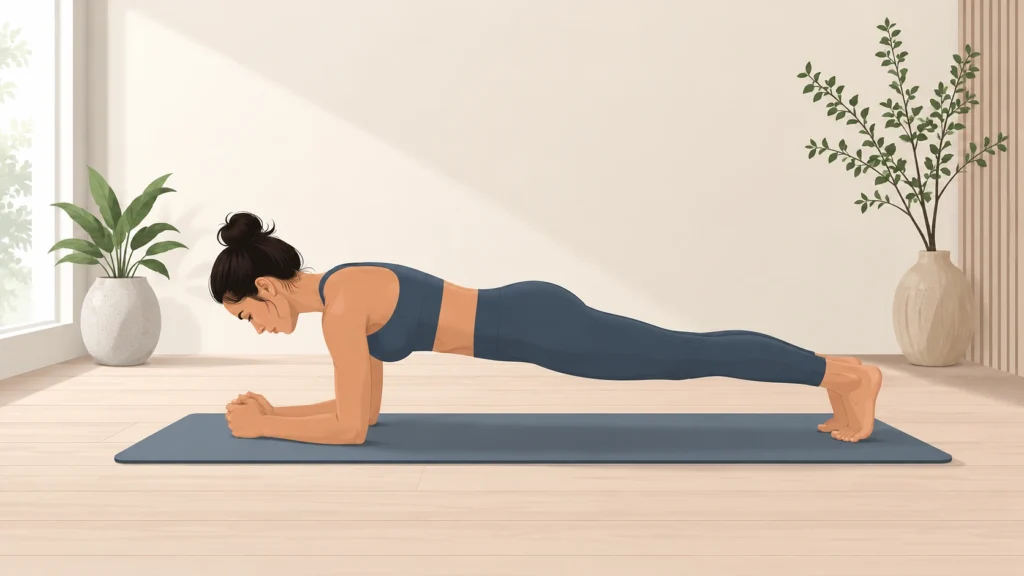
If the run is the engine, this is the part doing the quiet heavy lifting. These are active holds, not passive stretches, and they fire up the deep muscles that stabilize your spine exactly what you want after a run.
- Boat Pose (Navasana): balance on your sit bones, chest up, legs toward a “V.” Hold 5–8 breaths, back straight (not rounded).
- Plank → Side Plank: 30 seconds high plank, then 15 seconds each side, navel drawn gently toward your spine.
- Dolphin Pose: forearms down, hips high shoulders, back and core all at once.
Sharp or pinching back pain is a stop signal, not something to push through.
The 100 Crunches: Overrated As-Is (Do This Instead)
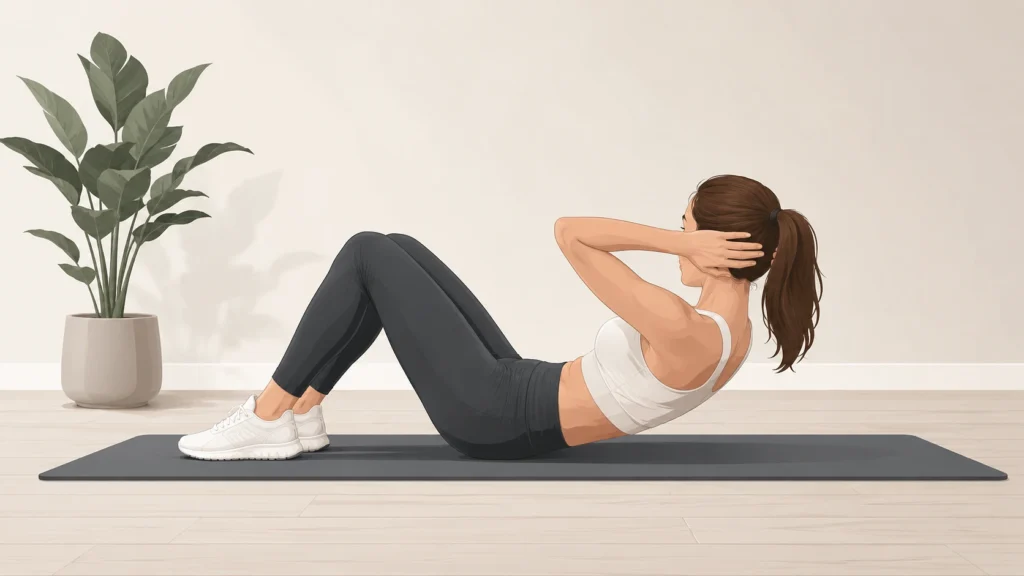
Here’s the one the highlight reels oversell. The truth: rep count isn’t the magic. A hundred sloppy crunches beat nothing, but they lose to fifty controlled ones and high-rep spinal flexion doesn’t suit every back. So treat “100” as a structure, not a sacred number, and mix the movements:
- Standard crunches (~40) — lift with your upper abs, don’t yank your neck.
- Bicycle crunches (~30) — 15 per side, hits the obliques.
- Reverse crunches (~30) — knees to chest, lower back stays pressed down.
And the upgrade most coaches agree on: pair crunches with planks and other “hold” exercises they’re more effective and far kinder to your back than endless crunching. History of back trouble? Skip the high-rep flexion and live on the holds.
The Breathwork Cool-Down: The Part Everyone Skips (Don’t)
It’s the least glamorous part, so it’s the first to get dropped which is a mistake. A few minutes of slow, controlled breathing (pranayama) signals your body out of “go” mode: it lowers your heart rate, eases tension, and clears your head for the day.
One honest correction to a common claim: it won’t “flush lactic acid” your body handles that on its own. But the calming, centring payoff is real, and it costs you five minutes.
The Final Verdict: Should YOU Actually Do This?
Put together, the routine earns a strong overall pass if you respect that it’s a big daily load, not a beginner warm-up. Be sensible about it:
- For beginners: create each piece week by week and then add them all together. There’s no prize for doing it all the first day.
- Injury, pregnancy or back, joint or heart conditions: consult a doctor or qualified instructor before. Adapting some parts (the high rep crunches, the deeper holds, the full run) requires a pro.
- Pay attention to your body: Soreness is okay; sharp pain, dizziness, tightening of the chest STOP.
Not any one thing it’s the flow: Cardio to wake the body, Yoga to stabilize, smart core work to strengthen and breathwork to land. Gradually build it up, not much on numbers, more on consistency.
This information is general fitness advice and not medical or personal fitness advice. Anyone who has a health condition and/or is not sure if this routine is right for him or her should consult a doctor or qualified instructor.