



Squid on its own has about 3 grams of carbohydrate per 100 grams, which is too little for anyone to measure a glycaemic index, so grilled or boiled squid does next to nothing to blood sugar. Fried calamari is a different animal. The flour, the oil and the sauce turn a near-zero-carb bit of seafood into 40 to 55 grams of fast carbohydrate, and the fat makes the spike arrive late. The rest of this piece shows where every gram comes from and how to keep squid on the plate with diabetes.
Type “squid glycaemic index” into Google and the results are a muddle. Some pages say there isn’t one. Others give a figure in the 70s, which turns out to have been measured on a bag of frozen breaded rings. Both are right, about different foods, and the muddle comes from calling them the same thing.
Why There Is No Glycaemic Index For Plain Squid
The glycaemic index ranks how quickly a food raises blood glucose against pure glucose. To test a food, volunteers eat a portion with 50 grams of available carbohydrate in it. A couple of slices of bread will do that. A plate of chips will do it. Squid won’t, not in any amount a person could get through.
USDA figures for raw squid come out at roughly 3 grams of carbohydrate, 16 grams of protein and 1.4 grams of fat per 100 grams. A volunteer would need to eat the best part of 1.7 kilos to hit the test dose. Nobody has run that trial and nobody will. For practical purposes the GI of plain squid is nil, the same as chicken or an egg.
The protein isn’t just neutral, either. Protein slows the stomach down, so squid eaten with rice produces a gentler rise than the rice would on its own. For someone building a meal rather than just avoiding things, that’s a useful property.
Where A Basket Of Fried Calamari Gets Its Carbohydrate
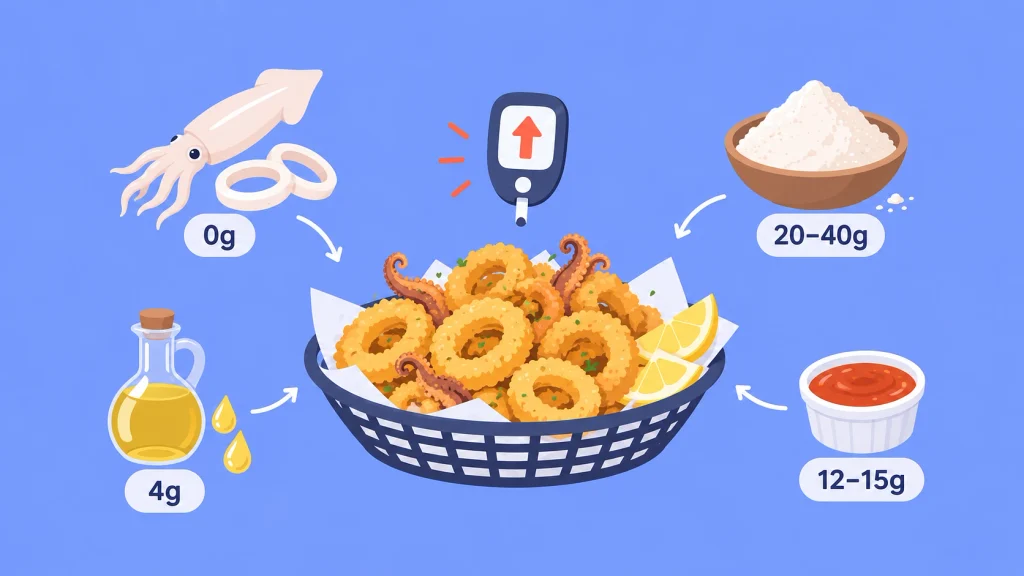
Take a normal restaurant starter, about 150 grams of rings and tentacles once cooked, and go through it.
- The squid: around 4 grams of carbohydrate. Barely worth writing down.
- The coating: a plain flour dredge adds 20 to 25 grams; a beer batter or a milk-and-flour batter adds 30 to 40. White flour sits in the low 70s on the GI scale, the same bracket as white bread.
- The oil: no carbohydrate, but 10 to 20 grams of fat soaked into the coating.
- The sauce: two tablespoons of marinara is 3 to 5 grams, mostly from the tomatoes. Two tablespoons of sweet chilli is 12 to 15 grams, almost all of it sugar.
- The lemon wedge: nothing. Also the only thing on the plate the squid actually needed.
So that starter comes in somewhere between 35 and 55 grams of quick carbohydrate, of which the squid contributed 4. The coating alone is roughly two slices of white bread’s worth.
Why The Blood Sugar Spike From Calamari Arrives Late
This catches people who test their own glucose. They eat fried calamari, test at the hour mark, see a modest rise and decide it’s fine. Then at two and a half or three hours the reading is higher than it was at one, and they’ve no idea why.
The answer is the oil. Fat slows the stomach’s emptying, so the flour, which would normally hit the bloodstream fast, arrives late and over a longer stretch. On a continuous glucose monitor the picture is a lower peak than white bread would give but a wide hump that hangs about for hours. Pizza does the same. So does fried chicken. Anyone on mealtime insulin has to take that into account, because a dose matched to the one-hour reading leaves the three-hour reading uncovered.
What The Label On Frozen Calamari Actually Says
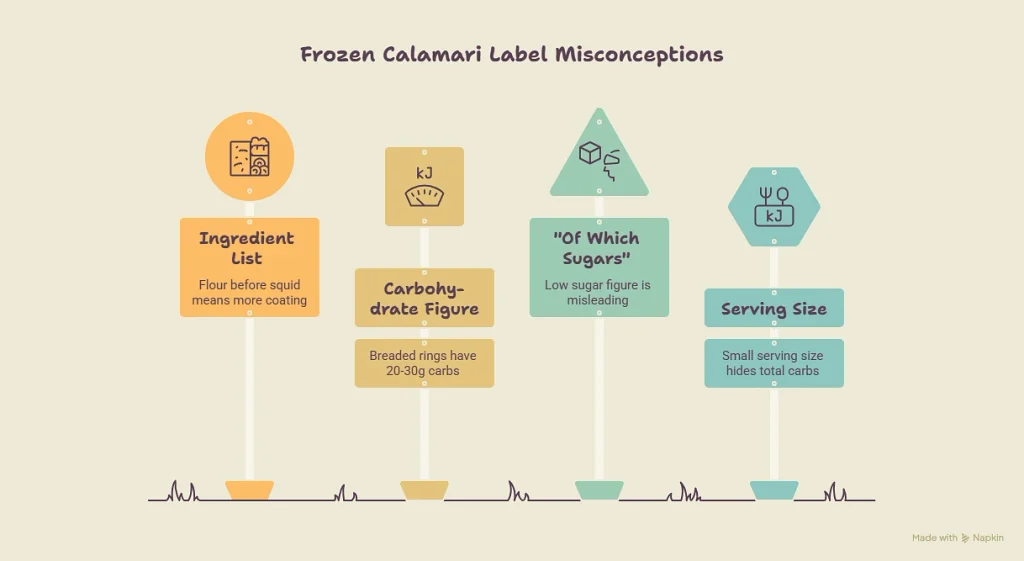
The supermarket freezer is where the “squid has a GI of 70” idea gets its start. A minute with the packet sorts it out.
- On breaded rings the ingredients list usually reads wheat flour, water, squid, rapeseed oil, salt, raising agents. If flour comes before squid, there’s more coating than seafood by weight.
- The carbohydrate per 100 grams figure tells the story. Plain frozen rings show 2 to 4 grams. Breaded or battered rings commonly show 20 to 30.
- The “of which sugars” line will be low, which misleads people. Flour is starch, not sugar. It still turns into glucose quickly.
- The serving size is often 60 grams, which is five or six rings. A normal plateful is two or three servings.
Rough rule: knock off 3 grams per 100 for the squid, and whatever’s left is the coating.
How The Cooking Method Decides The Outcome
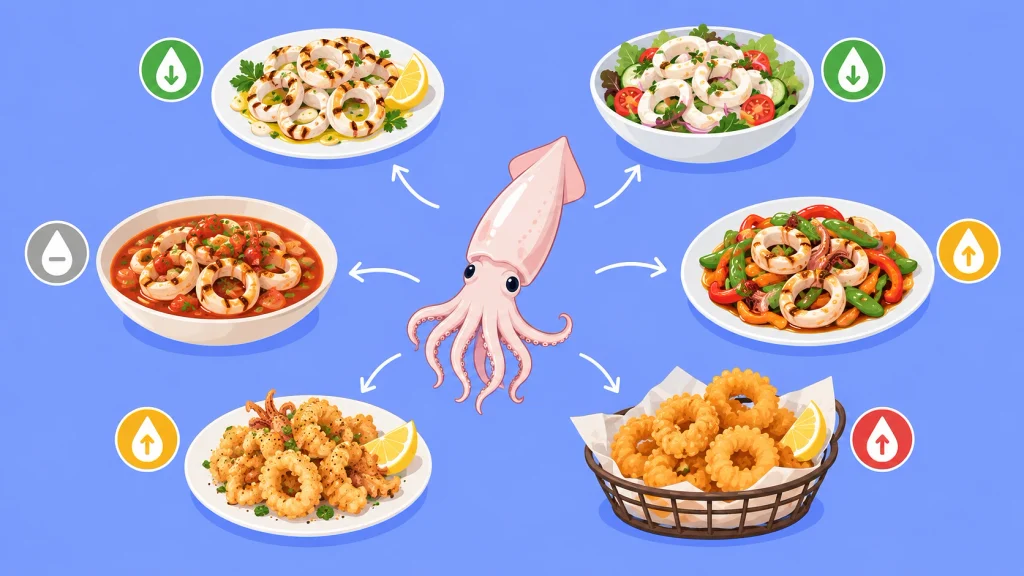
Same squid, different results.
- Grilled, barbecued or on a griddle: no added carbohydrate. Olive oil, lemon, garlic, parsley. How the Greeks, Spanish, Portuguese and Japanese mostly do it, and the best choice for blood sugar.
- Boiled or poached: the same, and the starting point for most squid salads.
- Stir-fried: fine with soy, ginger, garlic and chilli. The carbohydrate sneaks in through sauces thickened with cornflour and sweetened with sugar, which can add 10 grams or more without looking like much.
- Stewed with tomatoes: a few grams from the tomato. Nothing to worry about.
- Salt and pepper squid: a light cornflour dusting rather than a batter, so perhaps 8 to 12 grams a serving, though still deep fried.
- Battered or breaded and deep fried: the version that behaves like white bread with a slow fuse.
Is Squid Sensible For Someone With Diabetes
For blood sugar, plain squid is one of the better proteins going. A 100 gram portion is under 100 calories and brings selenium, vitamin B12, copper and a little omega-3 along with 16 grams of protein. Two things come up often enough to deserve a proper answer.
Cholesterol. Squid is high in it, around 230 milligrams per 100 grams, more than beef. Both the UK and US guidelines dropped their daily cholesterol limits some years ago, because saturated fat has a far bigger effect on blood cholesterol than cholesterol in food does. Squid a couple of times a week is fine for most people with diabetes. Anyone with high LDL or a history of heart trouble should raise it with their GP, since the two conditions so often come as a pair.
Salt. Plain squid has a modest amount. Dried squid, salt and pepper squid and squid in jarred sauces can be very salty, which is a blood pressure matter rather than a glucose one, and most people with diabetes are keeping an eye on both.
One more. Squid is a mollusc, not a crustacean. A prawn allergy doesn’t automatically mean a squid allergy, and the reverse is true as well, so it’s worth checking rather than assuming.
Keeping Calamari On The Menu Without The Spike
- Order grilled calamari where the menu has it. Most Greek, Italian and Spanish places list both.
- If it’s fried, share the basket and swap the sweet chilli for lemon, aioli or lime.
- At home, dust the rings in ground almonds or a very thin layer of cornflour and pan-fry or air-fry them. The carbohydrate drops to a few grams.
- Eat it after a salad or with vegetables rather than before the bread basket, so fibre and protein go in first.
- Keep the squid to a palm-sized portion, 100 to 120 grams, and count any coating as a separate carb portion on top.
- With a glucose monitor, test at two and three hours after fried calamari, not just at one. The delayed curve is easy to see once you know to look for it.
Disclaimer: General nutrition information, not medical advice. Anyone managing diabetes, heart disease or a shellfish allergy should talk to their GP or a dietitian about what suits them.
References:
- USDA FoodData Central, Mollusks, squid, mixed species, raw: https://fdc.nal.usda.gov/
- Diabetes UK, Glycaemic index and diabetes: https://www.diabetes.org.uk/guide-to-diabetes/enjoy-food/carbohydrates-and-diabetes/glycaemic-index-and-diabetes
- British Dietetic Association, Cholesterol fact sheet: https://www.bda.uk.com/resource/cholesterol.html
- NHS, Shellfish allergy information via Allergy UK: https://www.allergyuk.org/types-of-allergies/shellfish-allergy/