


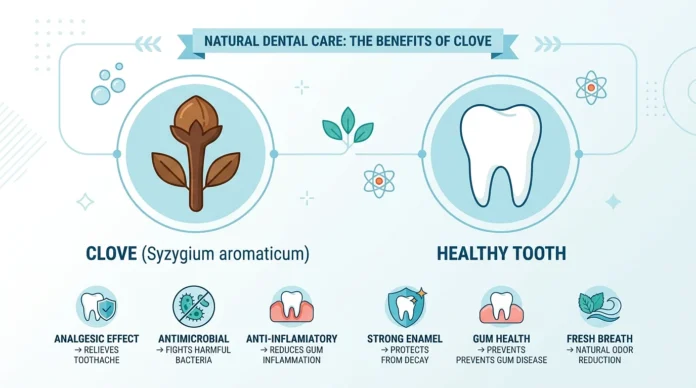
There is not much worse than a toothache that keeps you from going about your day. It is a piercing, piercing diversion to make work, sleep or even thought almost impossible. In the middle of the night or on a weekend, when dental pain strikes, it is an old reflex to reach out to the kitchen cabinet for a bottle of whole cloves or a bottle of clove oil.
However, cloves are hailed as a miracle home remedy on the internet, but in practice, it takes an expert touch. Cloves are an incredibly effective temporary triage tool, but have absolutely no restorative properties.
The Active Compound: Why Cloves Numb Pain
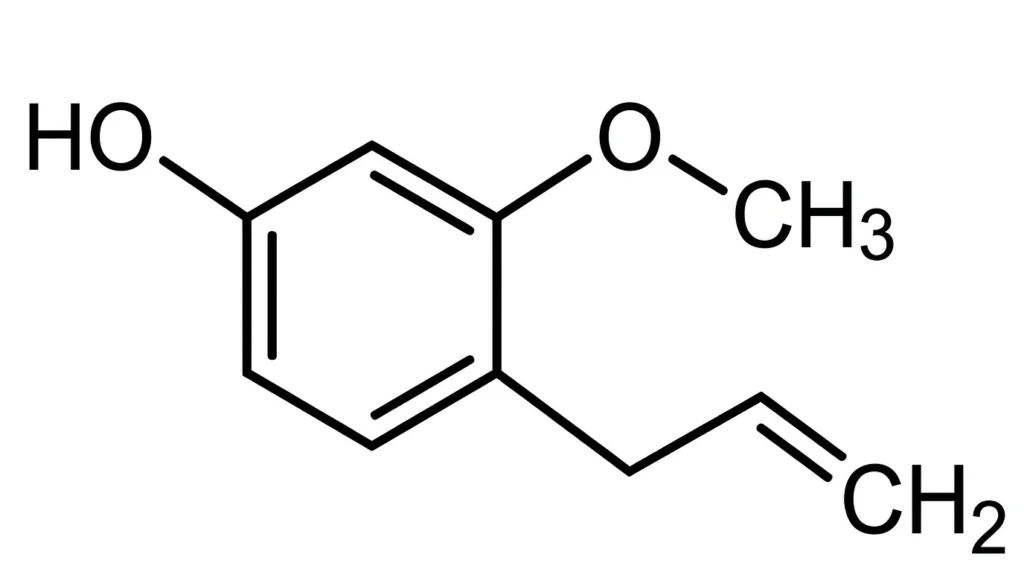
It is not just a folklore that dental remedy is established: it is based on organic chemistry. Contains a high concentration (up to 85%) of an aromatic volatile liquid compound called eugenol, which has very specific anesthetic, analgetic (pain-relieving) and antiseptic properties.
                  [ Eugenol Molecule ]
                           │
       ┌───────────────────┼───────────────────┐
       ▼                   ▼                   ▼
[ Voltage-Gated ]   [ Anti-Inflammatory ] [ Antimicrobial ]
[ Sodium Channels ] [  Inhibits COX-2   ] [ Disrupts Cell ]
       │                   │                   │
       ▼                   ▼                   ▼
 Blocks Pain Signals   Reduces Local Swelling  Slows Bacterial
  to the Brain                              Growth
When eugenol comes into contact with oral tissue, it works via three distinct pathways to alleviate agony:
- Temporary Neuro-Blockade: Eugenol is an active blocker of voltage-gated sodium channels in localised nerve fibres. In so doing, it prevents the nerve in the tooth from being able to transmit pain signals through the central nervous system to the brain and thus produces a quick numbing effect.
- Inflammation Suppression: Dental pain is mostly caused by the pressure build up that occurs due to an acute inflammation within the hard, inelastic walls of the tooth. Eugenol subduedly works to help inhibit cyclooxygenase-2 (COX-2), an enzyme which produces prostaglandins that trigger inflammation, calming that deep rhythmic throbbing sensation.
- Antimicrobial Activity: As a localized antiseptic, it interferes with the lipid-soluble cell membranes of commonly found oral bacteria, and may help temporarily prevent spread of a localized infection into surrounding tissues.
These specific biochemical effects make a purified form of eugenol a still basic ingredient in the clinical practice of modern dentistry. Eugenol is often combined with zinc oxide powder to make Zinc Oxide Eugenol (ZOE), a therapeutic and soothing temporary filling paste that can be used to soothe exposed dental pulp or treat painful dry sockets after a tooth extraction.
Application Protocols: How to Use Cloves Safely
When not used properly, it is easy to burn the sensitive tissues of your mouth with chemicals. When you need to fill in the time until your appointment with the dentist, make use of one of these three controlled, dentist-approved ways.
Diluted Clove Essential Oil (Most Effective)
Pure clove essential oil is incredibly volatile and highly concentrated. It should never be applied directly to oral tissue at full strength.
- To dilute: Combine 2-3 drops of pure clove essential oil with 1 teaspoon of a food-grade carrier oil, like cold-pressed olive oil or melted coconut oil.
- Saturate: Immerse a sterile cotton pellet or the end of a clean cotton swab in the diluted solution, shake off the excess.
- Apply: Place cotton directly against the biting surface of affected tooth and the surrounding gum line next to the tooth. Maintain this position for 1-2 minutes.
- Flush: After the area has been sufficiently numbed, expel the cotton and rinse the mouth very well with warm water, this will help to remove any leftover oil from the sensitive oral mucosa.
The Whole Clove Compress
If you do not have essential oil on hand, whole dried cloves from the spice rack can provide slower, time-released relief.
- Placement: Take 1 or 2 whole dried cloves and place them in your mouth on the side of the aching tooth.
- Soften: Let your saliva naturally saturate and soften the for roughly 3 to 5 minutes.
- Release: Gently press your teeth together to bruise the softened cloves. This structural change breaks open the plant cells, releasing the therapeutic eugenol oils.
- Position: Rest the bruised directly against the painful tooth or tuck them into the cheek pocket next to it for 20 to 30 minutes before spitting them out.
Whole-Mouth Clove Infusion Rinse
For diffuse, generalized discomfort or hard-to-reach areas around erupting wisdom teeth, a warm, concentrated rinse is ideal.
- Steep: Infuse 1 tablespoon of whole cloves in 1 cup of boiling water. Cover the container to keep the therapeutic steam from escaping, and let it steep for 10 minutes.
- Cool: Allow the liquid to cool completely to a lukewarm or room temperature. Note: Never use hot liquids on an inflamed tooth, as heat dilates blood vessels and will instantly worsen throbbing pain.
- Rinse: Swish the infusion vigorously around your mouth for 30 to 60 seconds, focusing on the painful quadrant, then spit it out completely.
Safety Guardrails and Side Effects
In natural medicine, “natural” does not automatically equate to “safe.” Eugenol is a powerful biochemical agent that demands strict caution regarding dosage and placement.
Critical Warning: Tissue Toxicity
Undiluted, Clove Oil is highly corrosive to living tissue. Clove oil should not be used directly on the gums, tongue or the inside of the cheek walls, because it can lead to severe chemical burns, necrosis of the tissues and painful mucous membrane ulceration. At all times use a carrier oil.
- Risk of Pulpal Damage: If your tooth has a deep open cavity that is directly exposing the internal nerve tissue (the pulp), use of high concentrations of clove oil can be toxic (cytotoxic) to the cells in the area. It may destroy or kill the remaining nerves and speed up the development of an irritating root abscess.
- Never put clove oil on babies, toddlers, or little kids who are teething. The developing liver is not able to easily metabolize eugenol, and ingestion results in systemic toxicity including hepatic (liver) distress very rapidly.
- Bleaching Complications: Eugenol has antiplatelet properties, making it a mild, natural blood-thinner. Large amounts of cloves may actively interfere with normal blood clotting after dental extraction, so if you are taking prescription anticoagulants (such as warfarin) or if you are having a dental extraction soon, avoid cloves.
The Ultimate Truth: A Remedy, Not a Cure
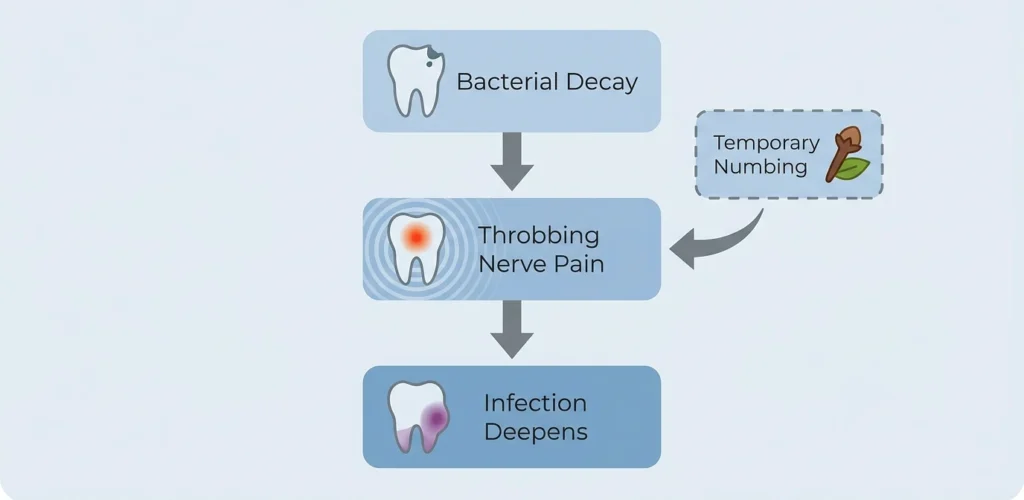
Cloves can NOT fix structural damage or permanently kill deep seated colonies of bacteria.
A real toothache typically is the result of a physical or structural problem or a progressive bacterial infection in a contained area. Usually results from extensive dental decay which has eroded through the protective enamel, a broken root, a poor restoration, or a bacterial abscess at the root tip.
Eugenol will stop the nerve pathways from relaying distress signals to the brain for one or two hours, but during this time the bacterial infection or structural breakdown is still going full-steam ahead.
When the pain is only temporarily suppressed by masking it, a simple cavity which is easily treatable can become a complicated medical problem, which may need urgent Root canal treatment or a complete surgical extraction. Use cloves as a tool to get you through the night, but get to your dentist ASAP on the following morning.