Six weeks is a strange point after a knee replacement. It’s far enough from the operation that everyone around you has stopped asking how you are, and close enough that the knee still feels like it belongs to somebody else. Mine was hot every evening, stiff every morning, and clicked when I went downstairs. I spent most of week six googling “is this normal” at 2 am, which is exactly how you shouldn’t spend it.
So this is the page I wanted then. What a knee usually feels like at six weeks, what my physio told me was fine, and the shorter list of things that mean you ring the clinic today rather than waiting for the next appointment.
What A Knee Replacement Feels Like At Six Weeks
What A Knee Replacement Feels Like At Six Weeks
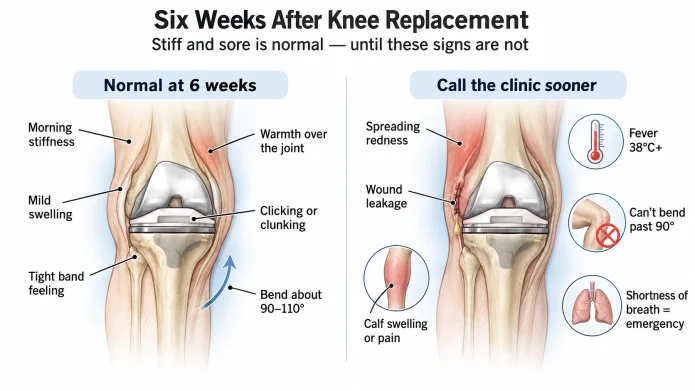
If any of this is you, you’re on track:
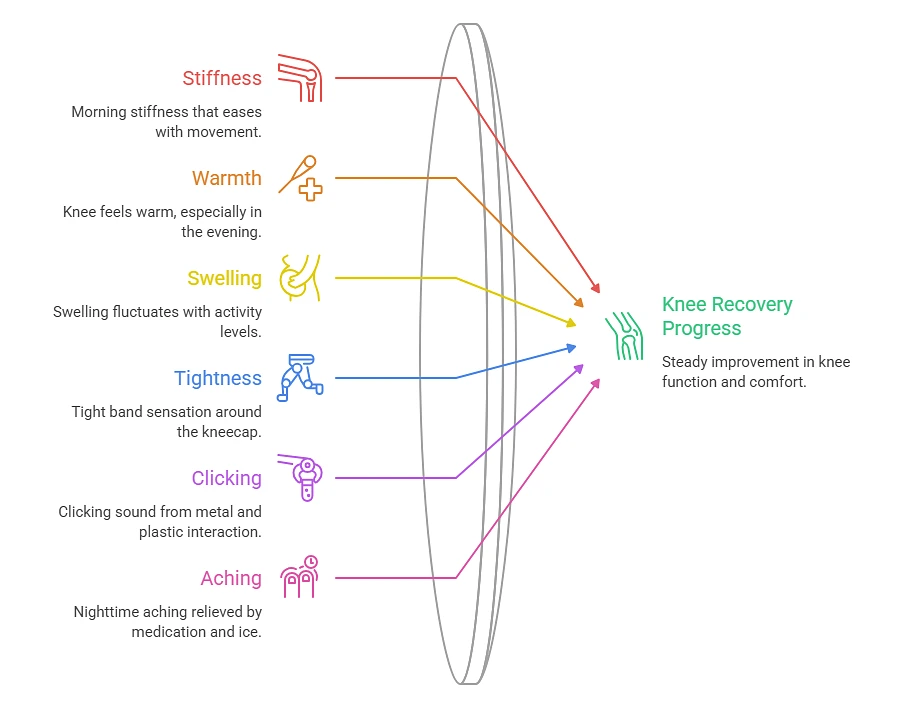
Stiffness first thing in the morning and after sitting for a while. It loosens after ten minutes of moving. My physio called it “gel”. You feel like the knee has set overnight.
Warmth over the joint, especially in the evening. A new knee runs warm for months. Mine did for about six.
Swelling that goes up and down with how much you’ve done. More walking, more puffiness the next morning.
A tight band feeling around the kneecap, and skin that’s numb or tingly on the outside of the scar. Both are common. The numb patch may never fully come back.
Clicking or clunking as you bend. It’s the metal and plastic meeting. It’s unsettling and it’s not a problem.
Aching at night, enough to wake you sometimes, that paracetamol and an ice pack settle.
Bend of roughly 90 to 110 degrees, and the knee straightening to nearly flat. If you can sit on a normal chair with your foot tucked slightly under, you’re around 90.
Walking without crutches indoors, maybe a stick outside, and tiring far sooner than you’d like.
Six weeks is also when a lot of people are cleared to drive again, if it was the left knee or an automatic, and if you can do an emergency stop without wincing. Ask, don’t assume.
Why The Knee Is Still Stiff When The Wound Has Healed
The skin heals in two weeks. Everything underneath takes a year.
During the operation the surgeon cuts through the joint capsule and moves the muscles and tendons around the knee to get at the bone. All of that is now scarring, and scar tissue is shorter and tighter than what it replaced. Every time you bend the knee you’re stretching that scar a fraction, and every night it tightens back a little. Stiffness at six weeks is scar tissue doing what scar tissue does, and the exercises are how you win the argument with it.
The swelling matters too. A swollen knee physically can’t bend as far, and the fluid makes the muscles around it switch off a bit. This is why every physio bangs on about ice and elevation. It isn’t for comfort. It’s so the knee can bend.
What You Should Be Doing Every Day At This Stage
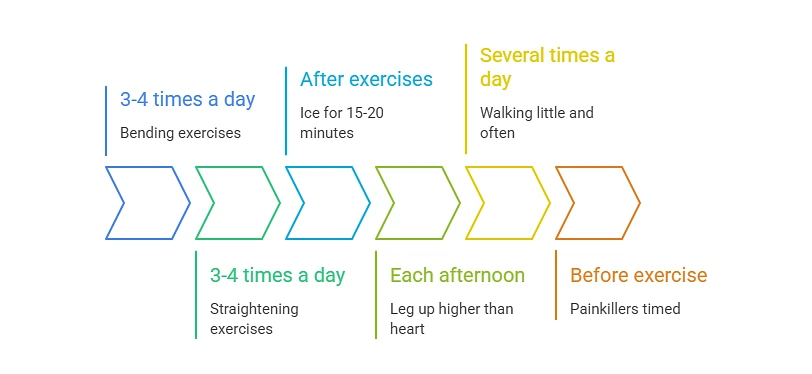
My physio’s list, more or less word for word:
Bending exercises 3 to 4 times a day. Heel slides on the bed, sitting on a chair and pulling the foot back under you, a few minutes on a static bike if you’ve got one.
Straightening exercises just as often. Heel on a rolled towel, knee unsupported, letting gravity pull it flat. Then pressing the back of the knee down into the bed. Full straightening is the one people neglect, and a knee that won’t straighten makes you limp for good.
Ice for 15 to 20 minutes after exercises, with a cloth between the ice and the skin.
Leg up higher than your heart for a while each afternoon.
Walking little and often. Ten minutes, several times, beats one long march that leaves the knee like a balloon.
Painkillers timed before exercise, not after, if you’re still taking them.
If you’re doing all that and the knee is slowly bending further week on week, even by a few degrees, you’re fine. Slow is normal. Stuck is the thing to watch.
The Signs That Mean You Ring The Clinic Today
Some things at six weeks aren’t stiffness and soreness, and waiting on them can cost you the result. My physio was blunt about these.
Signs Of Infection In The New Knee
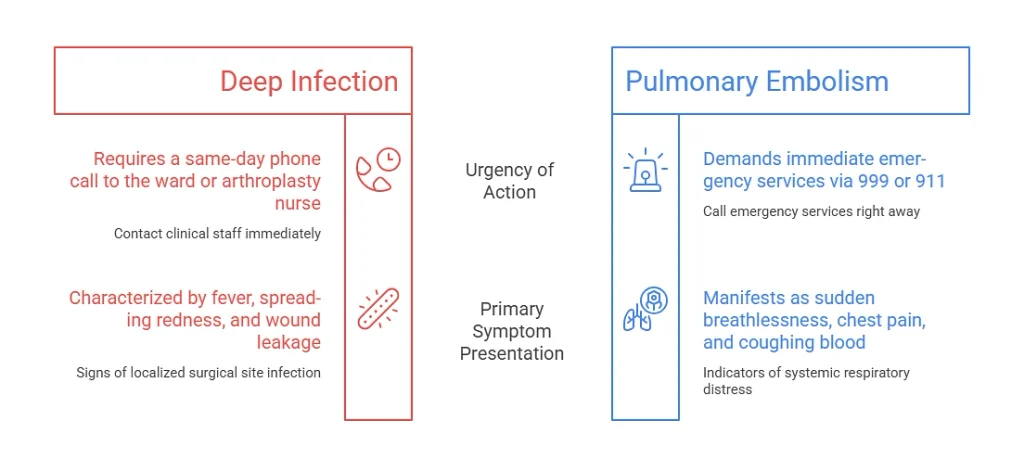
A temperature of 38 or above, chills, or feeling suddenly unwell.
Redness spreading out from the scar, or the skin around it getting hotter and shinier over a day or two.
Any fluid, pus or oozing from the wound, or a scab that lifts and leaks, this far out.
Pain that’s getting worse day on day, rather than better or the same.
A deep infection in a knee replacement is uncommon, around 1 in 100, but it’s the complication surgeons fear most, because it can mean taking the implant out. Every day matters. This is a same-day phone call to the ward or the arthroplasty nurse, or a walk into A&E if it’s the weekend.
Signs Of A Blood Clot
A calf that’s swollen, tight, warm and painful, especially compared with the other leg.
Pain in the calf when you flex your foot up.
Six weeks is inside the window for a deep vein thrombosis, particularly if you’ve stopped the blood-thinning tablets. Same day, no waiting.
Signs A Clot Has Reached The Lungs
Sudden breathlessness, chest pain that’s worse when you breathe in, coughing up blood, or feeling faint.
That’s 999 or 911, not the clinic. Don’t drive yourself.
Signs The Knee Is Getting Stuck
You can’t bend past about 90 degrees at six weeks despite doing the exercises, or the bend has gone backwards from a few weeks ago.
You can’t get the knee straight and it’s starting to feel locked slightly bent.
This one isn’t an emergency, but it is time-sensitive. Excess scar tissue (the surgeons call it arthrofibrosis) is easiest to deal with early. If a knee is stuck, some surgeons will do a manipulation under anaesthetic, where they bend the knee for you while you’re asleep to break the scar, and that works best in the first 6 to 12 weeks. After three or four months the scar has matured and it’s much harder. So a knee that isn’t moving at six weeks is a call to the physio this week, not a “wait and see”.
Other Things That Aren’t Normal
The knee giving way or feeling unstable when you walk.
A fall onto the knee, or a sudden new pain after a twist.
For the sake of the 2 am googling, here’s roughly where things went for me and for most people I’ve compared notes with.
Weeks 6 to 12: stiffness eases, the stick goes, walking distance climbs, the evening ache fades to an occasional grumble. Bend creeps to 115 to 120.
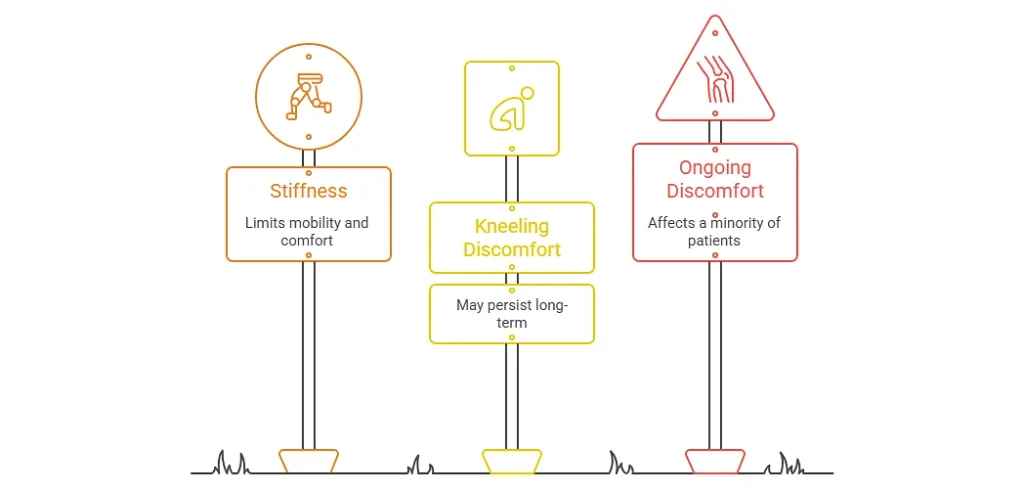
Months 3 to 6: stairs feel normal, kneeling is still uncomfortable and may always be, the warmth finally settles. Most people say this is when they stop thinking about the knee every day.
Months 6 to 12: the last of the swelling goes, the clicking gets quieter, and the knee just becomes a knee. Around 1 in 5 people are left with some ongoing discomfort, which is worth knowing so you’re not blindsided, and most of those still say they’d do it again.
Questions Worth Asking At The Six-Week Check
What’s my bend and straightening today, in degrees, and what should they be by twelve weeks?
Is my swelling where you’d expect?
Which of my exercises should I push harder, and which should I drop?
Can I drive, and can I go back to work?
What’s the one sign that would make you want to see me sooner?
Write the answers down. At six weeks you’re tired and a bit fed up, and the numbers are the thing that tell you next month whether you’re actually getting somewhere.
I got to 118 degrees at twelve weeks, in the end. The morning gel went by month four. The clicking is still there, and I’ve stopped hearing it.
Written from my own knee replacement and my physio’s advice, not as medical advice. Fever, a red or leaking wound, a swollen calf, chest pain or breathlessness after joint surgery need medical attention the same day.
Dr SYED TAHIR ZAFAR BUKHARI is General Physician, expert in Allergy Medication, Hearing Aid Fitting. After retirement writing researched healthcare opinions online.