


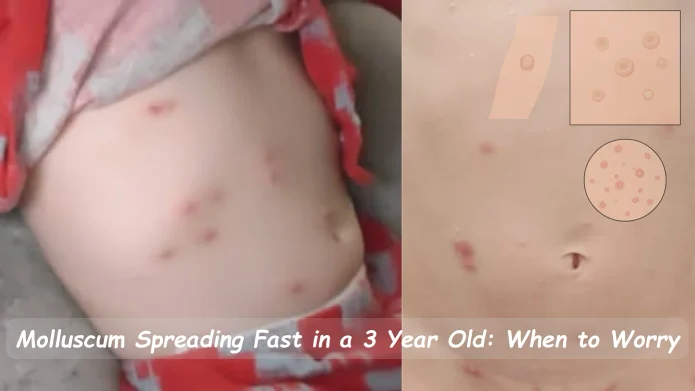
You found four of those little pearly bumps on your 3 year old’s tummy a couple of months back, the doctor took one look and said molluscum, it will go away by itself, and now at bath time there are twenty something of them across the chest, one armpit and the back of a knee. That does look like it is getting worse, and in a way it is, but this is the usual road molluscum takes on a toddler. A growing bump count on an otherwise healthy 3 year old does not mean the child is getting sicker. Most kids are clear of it somewhere between six months and a year and a half after it starts, a few hang on longer, and the bumps tend to multiply for a while before they go.
The things that should send you back to the doctor are fewer than you would think a bump on the eyelid, pus with a fever, or one bump growing far bigger than the rest.
Why Your Toddler Keeps Getting New Molluscum Bumps
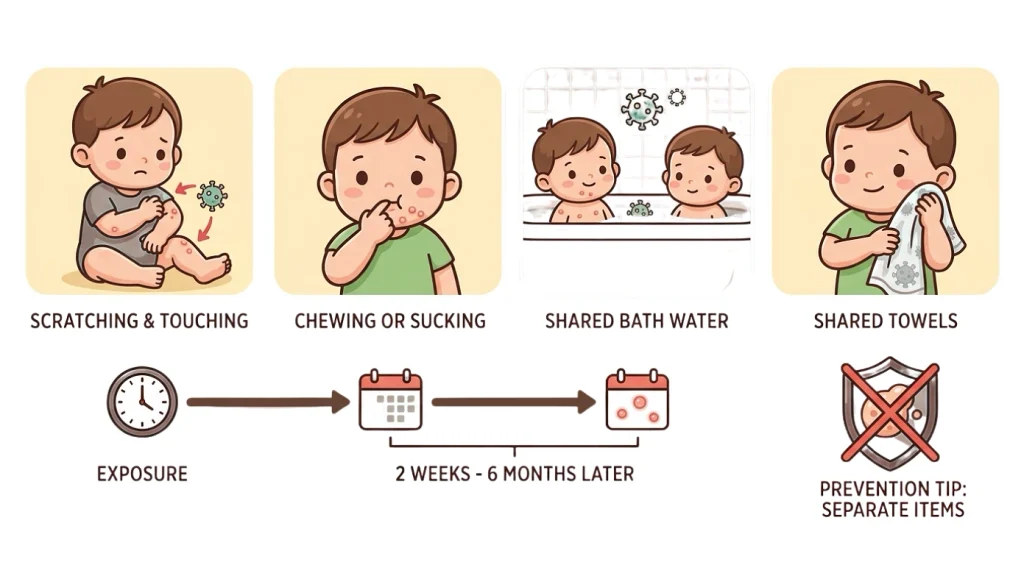
Molluscum is a virus from the pox family, and it stays in the very top layer of skin, inside that soft white core every bump has in the middle. When the core gets opened, the virus gets out onto whatever touched it, and a 3 year old touches everything. The ways it usually travels around one small body are pretty ordinary:
- Scratching a bump and then scratching somewhere else.
- Chewing or sucking on an arm or a finger, which is how bumps end up on the chin and lips.
- Sitting in the same bath water as a brother or sister.
- Drying off with a towel that already touched the bumps.
Understand this first, though. The bump you spot tonight was not caught tonight. After the virus lands on skin, a bump can take anywhere from two weeks to six months to show up, so a parent who has been strict about separate towels for ten days and still finds three new ones has not failed at anything, those three were already on their way before the towels changed. Give any new habit a month or two before deciding whether it is working.
If Your Child Also Has Eczema
Expect more bumps and a longer stretch of them. Dry, cracked skin lets the virus in easily, the itch makes the child scratch, and the scratching carries the virus further, so the eczema and the molluscum keep feeding each other.
A lot of these kids also get a pink, scaly, itchy rash around the bumps, which dermatologists call molluscum dermatitis. Parents often take it as the infection spreading out, when it is the skin reacting to the virus sitting next to it. Moisturizing that skin every day, morning and after the bath, tends to do more good than anything put on the bumps.
A Red, Swollen Molluscum Bump Usually Means It Is Healing
Most parents panic at this stage. A bump that has sat there pale and boring for months suddenly turns red, puffs up, maybe gets a crust on top and starts looking like an angry pimple, and the first thought is that it has gone infected.
Most of the time it has not. That redness is the child’s immune system finally noticing the virus and going after it, and dermatologists have a name for it, the BOTE sign, short for “beginning of the end.” The name comes from a 2013 paper in the journal Pediatrics, and it stuck mostly because it is easy for a worried parent to remember. A case report published years later followed a 5 year old boy whose bumps went red in this way and were completely gone about two months after.
A healing red bump might itch or feel a little sore for a few days. The redness stays tight around the bump itself, the child carries on eating and playing like normal, and over the next weeks the bump shrinks down and leaves a small pale mark or a tiny dent where it used to be. That kind of bump does not need antibiotics, and it does not need squeezing either. Squeezing is actually the easiest way to turn a healing bump into an infected one, because it pushes skin bacteria into an open spot.
Signs The Red Bump Has Become Infected Instead
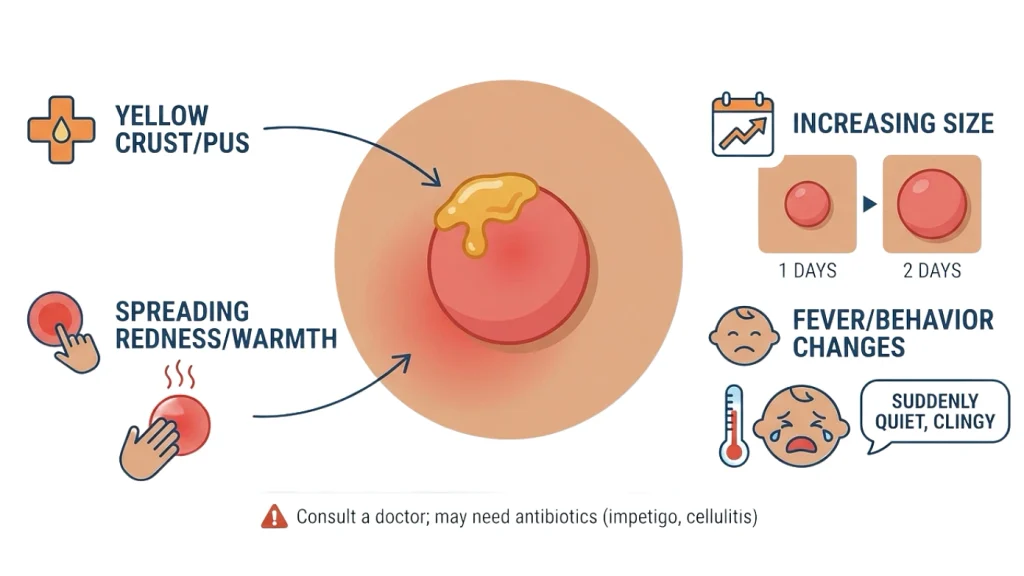
An infected bump looks different once you know what to watch for:
- Yellow or honey colored crust, or pus that comes back after it is wiped.
- Redness that keeps spreading outward past the bump and feels warm under your hand.
- The red area getting bigger from one day to the next.
- A fever, or a child who is suddenly quiet, clingy and off food.
That is bacteria getting into a scratched bump, often as impetigo or cellulitis, and it should be seen by a doctor in a day or two since it may need antibiotic cream or medicine.
When To Take A Child With Molluscum Back To The Doctor
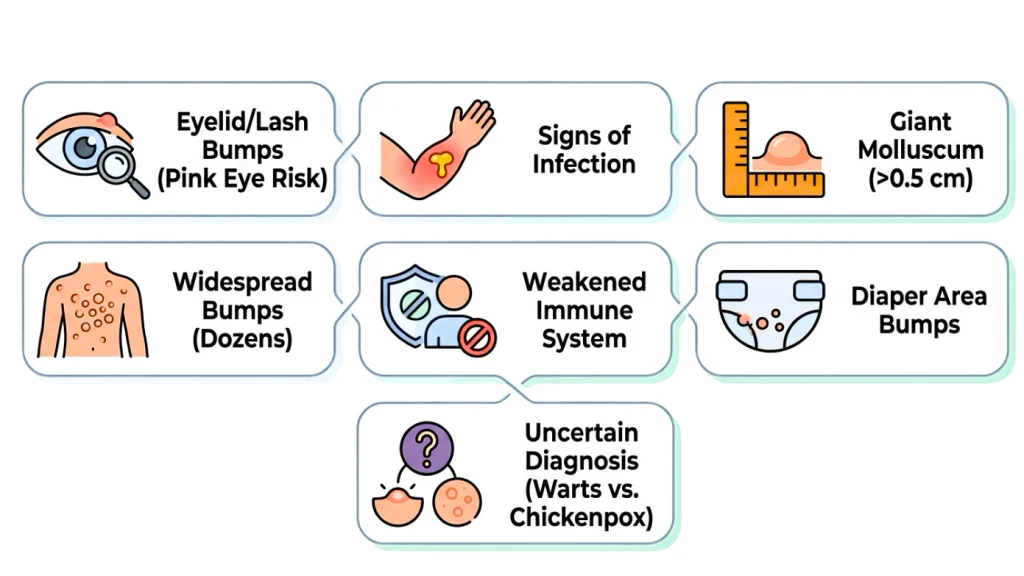
Plenty of children only ever need the first visit, the one where the doctor confirms what the bumps are. These are the situations where a second visit is worth booking soon rather than waiting:
- Bumps on the eyelid or right along the lashes. These can keep irritating the eye and cause a pink eye that does not settle until the bump itself is dealt with, and sometimes an eye doctor gets involved.
- Any of the infection signs from the list above.
- One bump growing much bigger than the others. Bumps of half a centimeter or more are called giant molluscum, and doctors like to look at them.
- Dozens upon dozens of bumps, heading toward the hundreds.
- A child who already has an illness or takes a medicine that weakens the immune system, because widespread molluscum can be one way a weak immune system shows itself.
- Bumps in the diaper area. On a toddler they nearly always got there by the child’s own hand, but a doctor should still see them.
- You are not sure it is molluscum in the first place. Warts and chickenpox can fool a tired parent at bedtime.
Treatments A Doctor Can Offer A 3 Year Old
For years the standard answer was to wait, partly because the U.S. Food and Drug Administration (FDA) had not approved anything for molluscum at all. That changed recently. In July 2023 the FDA approved Ycanth, a liquid made from cantharidin, which comes from blister beetles, for anyone aged 2 and up. A doctor or nurse paints it on each bump in the clinic, a small blister forms under the bump over the next day and lifts it away, and the liquid has to be washed off within 24 hours. Putting it on does not hurt. The blisters afterward can be sore.
Then in January 2024 came Zelsuvmi, a gel parents put on at home once a day, approved for children from 1 year old. It releases nitric oxide into the skin, and redness and stinging where it goes on are the usual complaints.
Scraping the bumps off with a small spoon shaped tool, or freezing them, both work as well, but for a 3 year old they are often more upsetting than the bumps ever were, numbing cream or not.
None of these stops new bumps from appearing, they only take away the ones already there while the body clears the virus in its own time. So a few bumps on the back that the child does not even notice can be left alone without guilt. Thirty itchy ones and a child crying through every bath is a different situation, and asking the pediatrician about Ycanth or Zelsuvmi then is completely fair. Check what the insurance plan covers before the appointment, because coverage for the two newer ones varies.
Bath Time, Towels And Daycare While The Bumps Are There
Small habits will not clear the bumps any faster. What they do is slow down the new ones and keep brothers and sisters from catching it:
- Keep the child’s nails cut short.
- Give the child a towel and a washcloth of their own, and keep them apart from the family’s.
- Bath the child alone, or last if a sibling is still clear.
- Cover bumps with clothes or a watertight bandage for swimming and rough play.
- Moisturize dry or eczema prone skin daily.
- Wash your hands after putting cream on the bumps.
Daycare and preschool are fine. The Centers for Disease Control and Prevention says children with molluscum do not need to be kept home, so there is no reason to lose work days over it. At the pool, a watertight bandage over the visible bumps and the child’s own towel are enough, and it helps not to share kickboards and pool toys while the bumps are around.