


Key Takeaway:
- No study has shown that whitening harms an unborn baby, but none has shown it’s safe either, so most dentists will ask you to wait until after the birth.
- Pregnancy gums are often swollen and sore, and peroxide gel tends to make them worse.
- A scale and polish is safe in pregnancy, it shifts a surprising amount of surface staining, and on the NHS it’s free while you’re pregnant and for a year after.
A lot of women only think to ask this after they’ve already used a few whitening strips, sometimes before they even knew they were expecting. If that’s you, stop using them, mention it at your next dental check, and try not to worry.
The reason dentists say no has less to do with any known danger and more to do with the fact that peroxide has never been tested on pregnant women, and it won’t be, because no ethics committee would ever sign off that trial. Whitening is purely cosmetic, so for the sake of a few months, most dentists would rather not take the chance.
Is Teeth Whitening Safe While You’re Pregnant?
There’s no proof it’s harmful, and no proof it’s safe, which is why the advice is to hold off. Whitening gels work with hydrogen peroxide, or with carbamide peroxide, which turns into hydrogen peroxide once it’s in your mouth. Saliva breaks it down fairly quickly and the amount swallowed from a tray is small, so it’s unlikely much reaches the baby. “Unlikely” is as far as anyone can honestly go, though.
Whitening in the UK also comes with legal limits. Products with more than 0.1% hydrogen peroxide can only legally be used by a dentist, or by a hygienist or therapist on a dentist’s prescription, and only on people over 18. Beauty salons and kiosks offering it are breaking the law, and the stronger kits sold online from abroad sit outside those rules altogether. So if a dentist won’t whiten your teeth while you’re pregnant, the answer isn’t a cheaper version somewhere else.
Why Your Dentist Will Probably Say Wait
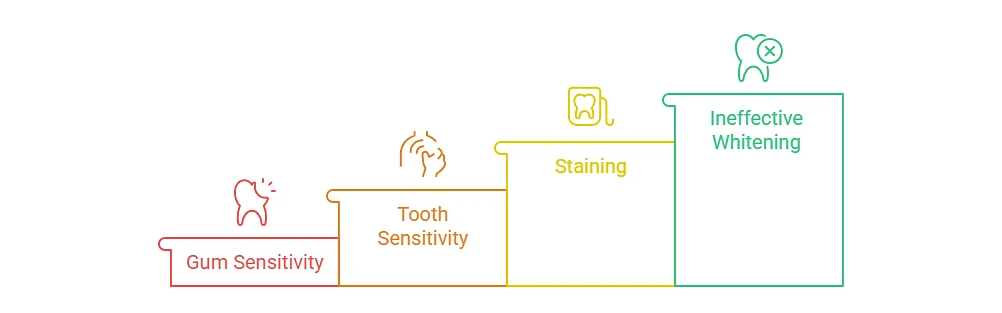
The unknown effect on the baby is only part of it. Pregnancy changes your mouth in ways that make whitening a poorer bet anyway.
Your Gums Are More Likely To Bleed And Sting
Hormone changes make the gums react far more to plaque, and somewhere between 60% and 75% of pregnant women get pregnancy gingivitis, with red, puffy gums that bleed when you brush. Peroxide gel sitting against gums like that will sting, and it can leave white, sore patches along the gum line. A treatment that felt fine last year could be quite uncomfortable now.
Your Teeth May Already Be Sensitive
Sensitivity is the most common side effect of whitening even when you’re not pregnant. If morning sickness has worn some of your enamel away, cold drinks may already make you wince, and bleaching on top of that tends to make it worse.
The Colour Might Not Last Anyway
Teeth that are getting a bath of stomach acid several times a week, with a cup of tea or two in between, pick stains back up quickly. Money spent on whitening in the first few months could be wasted by the third trimester.
Why Teeth Can Look Duller Or More Yellow In Pregnancy
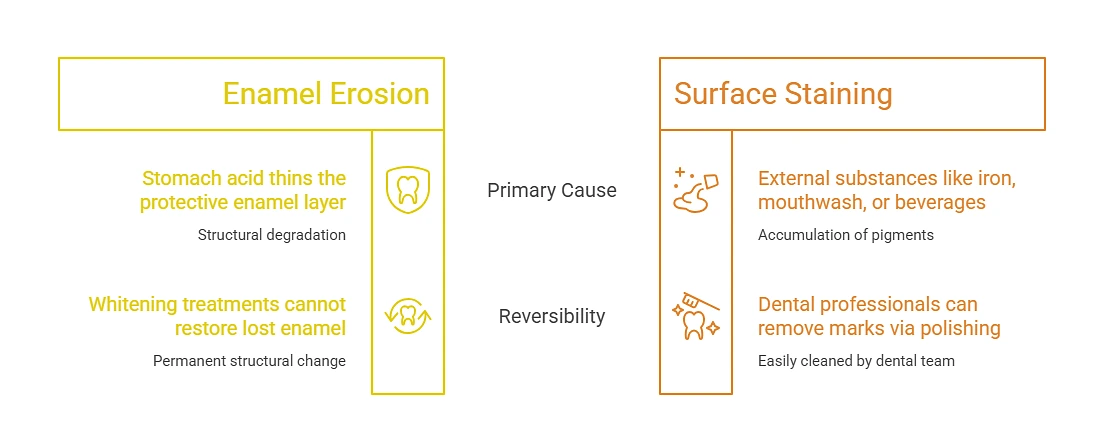
Plenty of women notice their teeth look duller while they’re pregnant, and the cause matters, because bleach won’t fix all of it.
- Enamel worn by sickness. Stomach acid thins enamel, and the dentine underneath is naturally yellowish. Whitening doesn’t put enamel back, so this kind of yellow won’t shift much.
- Liquid iron. Iron drops and syrups can leave dark grey or black marks on teeth. Iron tablets don’t usually do it, and the marks sit on the surface, so a polish takes them off.
- Chlorhexidine mouthwash. Some dentists suggest it for bleeding gums, and it’s known for leaving brown stains, particularly if you drink tea or coffee.
- Cravings. Cola, blackcurrant squash, strong tea, all of it stains faster than you’d expect.
So a fair bit of the dullness that turns up in pregnancy is surface staining, and that’s the part a dental team can deal with without any bleach at all.
What You Can Safely Do For A Brighter Smile Until Then
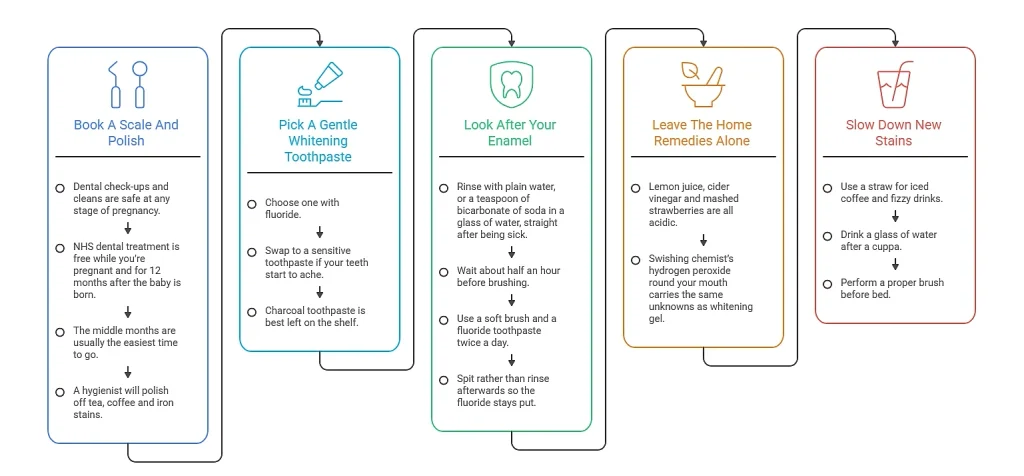
None of these involve peroxide, and most of them protect your teeth at the same time.
Book A Scale And Polish
Dental check-ups and cleans are safe at any stage of pregnancy, and NHS dental treatment is free while you’re pregnant and for 12 months after the baby is born, as long as you have a valid maternity exemption certificate (your midwife can sort the form). The middle months are usually the easiest time to go, since the sickness has often eased and lying back in the chair is still comfortable. A hygienist will polish off tea, coffee and iron stains, and many women are taken aback by how much brighter their teeth look afterwards.
Pick A Gentle Whitening Toothpaste
Most whitening toothpastes don’t bleach at all. They polish surface stains off, which is fine in pregnancy. Choose one with fluoride, and swap to a sensitive toothpaste if your teeth start to ache. Charcoal toothpaste is best left on the shelf, since a review in the British Dental Journal found little evidence that it whitens anything and raised worries about it being too rough on enamel.
Look After Your Enamel When You’re Being Sick
This will do more for the colour of your teeth over time than anything you can buy.
- Rinse with plain water, or a teaspoon of bicarbonate of soda in a glass of water, straight after being sick.
- Wait about half an hour before brushing, because scrubbing enamel that acid has softened wears it away faster.
- Use a soft brush and a fluoride toothpaste twice a day, and spit rather than rinse afterwards so the fluoride stays put.
Leave The Home Remedies Alone
Lemon juice, cider vinegar and mashed strawberries are all acidic, and rubbing acid onto teeth that are already dealing with stomach acid only weakens them further. Swishing chemist’s hydrogen peroxide round your mouth carries the same unknowns as whitening gel, so give that a miss as well.
Slow Down New Stains
A straw for iced coffee and fizzy drinks, a glass of water after a cuppa and a proper brush before bed will keep fresh stains from building up while you wait.
When You Can Whiten Your Teeth After The Baby Arrives
Most dentists are happy to whiten once the baby is here. Gums usually calm down over the first few months after the birth, and teeth tend to feel less sensitive once the sickness has stopped, so leaving it a little while after delivery often gives a better and more comfortable result.
Breastfeeding is less clear cut. There’s no evidence that peroxide from whitening gets into breast milk in any amount that matters, and some dentists will go ahead, while others would rather wait until you’ve finished feeding. That’s a question for your own dentist.
Book your free check-up and clean if you haven’t had one yet this pregnancy, tell the dental team about any sickness or iron you’re taking so they know what they’re looking at, and keep the whitening for after the baby comes.