


Key Takeaway
- Chlamydia: doxycycline 100 mg twice a day for 7 days is the standard treatment. No sex until the course is done, partners from the last 60 days get treated, and you retest at about 3 months.
- Syphilis: a single penicillin injection is the first choice. Doxycycline is only used with a penicillin allergy, for 14 days in early syphilis or 28 days if it’s been there over a year or the timing is unknown.
- Pregnancy: no doxycycline. Chlamydia is treated with azithromycin, and syphilis with penicillin after desensitization if needed.
- Never reuse leftover tablets. A 7-day supply is too short for syphilis at any stage.
Syphilis and chlamydia can both be treated with doxycycline, at a dose of 100 mg twice a day for each, and that overlap causes a real mistake at home. A person treated for chlamydia last year finds a few leftover tablets, or compares their prescription with a partner’s, and assumes a week will cover whatever they have now. For chlamydia, seven days is the full treatment. For syphilis it isn’t enough at any stage, and doxycycline isn’t even the first choice.
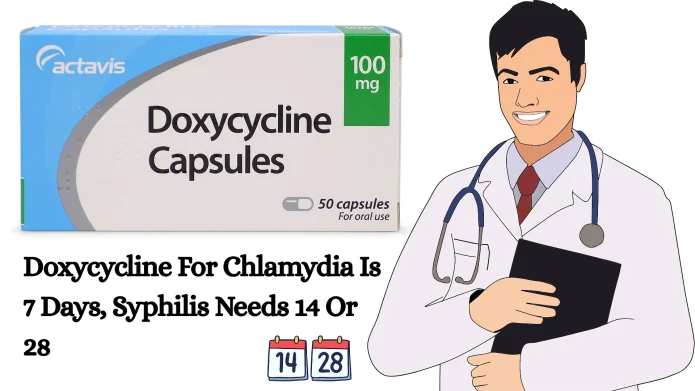
Chlamydia takes 7 days of doxycycline. Syphilis is treated with a penicillin injection, and doxycycline is only used when penicillin can’t be, for 14 days in early syphilis or 28 days in later syphilis.
Syphilis Needs Penicillin First And A Longer Course If Doxycycline Is Used
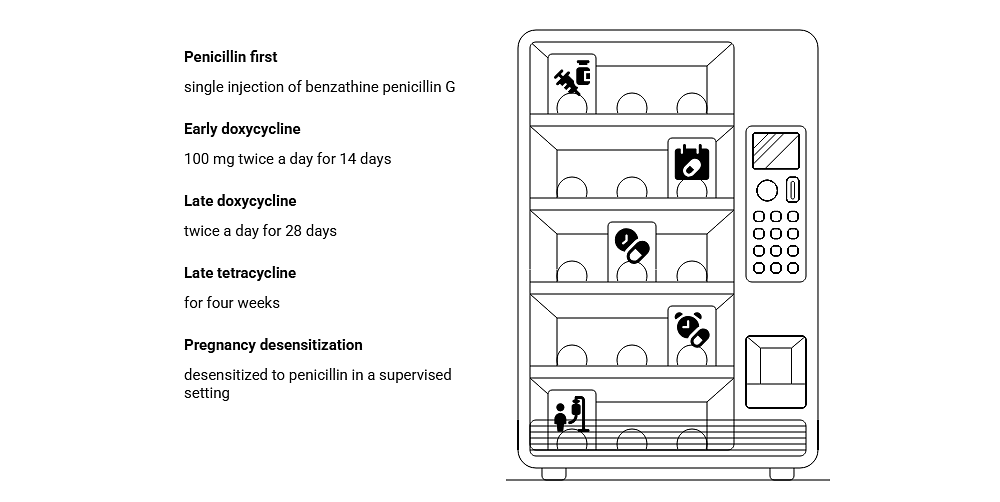
The standard treatment for primary, secondary and early latent syphilis is a single injection of benzathine penicillin G. Doxycycline comes in for people with a penicillin allergy who aren’t pregnant, and the doxycycline 100 mg twice a day for 14 days. That guideline also points out that the evidence for alternatives is thinner than for penicillin, so people treated with them need careful follow-up.
When syphilis has been present for more than a year, or the timing can’t be worked out, the course doubles. The CDC lists doxycycline twice a day for 28 days, or tetracycline for four weeks, as the only acceptable alternatives to penicillin for late latent syphilis.
Pregnancy is handled differently. Doxycycline can harm a developing baby and syphilis can be passed to the baby, so a pregnant woman with a penicillin allergy is desensitized to penicillin in a supervised setting and then given penicillin.
The reason for the longer course comes down to the bacterium. Treponema pallidum, the organism behind syphilis, spreads through the bloodstream and multiplies slowly, around once every 30 hours, so the drug has to stay at effective levels long enough to catch it through many cycles. The penicillin injection is designed to release slowly over a couple of weeks. Doxycycline leaves the body within a day or two, so it has to be taken twice daily for the whole period.
Secondary syphilis often shows up as a rash, sometimes on the palms of the hands and soles of the feet, that doesn’t itch much. A rash like that is a reason to get tested, and a dermatologist or a sexual health clinic can do it.
Chlamydia Is Cleared With One Week Of Doxycycline
Doxycycline 100 mg twice a day for 7 days for chlamydia in adults and teenagers. A single 1-gram dose of azithromycin or a week of levofloxacin are the alternatives, and in pregnancy the recommended treatment is the single azithromycin dose, not doxycycline.
Sex should wait until the seven days are finished and any symptoms have gone. Anyone you had sex with in the 60 days before diagnosis should be tested and treated, or the infection can come straight back. A repeat test about three months after treatment is recommended even when everyone was treated, because reinfection is common.
A 7-day course is right for chlamydia and wrong for syphilis. Leftover tablets from an old prescription shouldn’t be used for either one without a new diagnosis.
What To Expect While Taking Doxycycline And Afterward
The MedlinePlus doxycycline page covers the full instructions. The points that cause most problems are these:
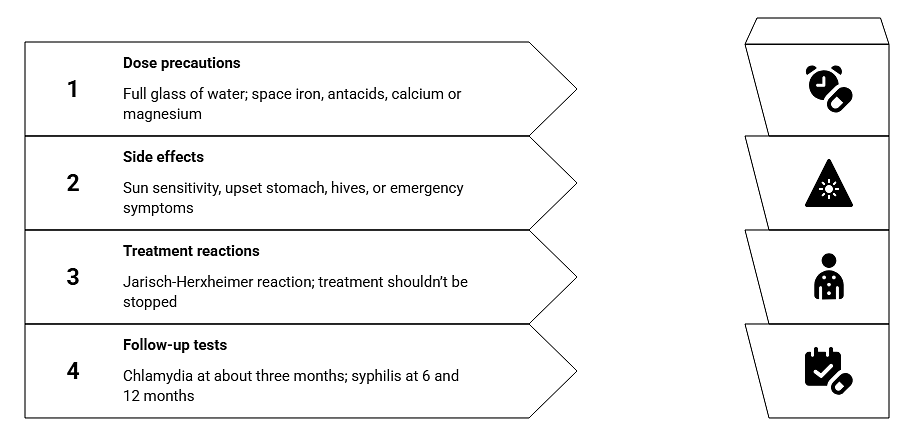
- Each dose goes down with a full glass of water, and lying down straight after can let a tablet irritate the esophagus.
- Iron supplements should be taken 3 hours before or 2 hours after a dose.
- Antacids and calcium or magnesium products also need spacing away from it.
- It makes the skin burn more easily in the sun.
- The course should be finished even after symptoms are gone.
An upset stomach is common, and taking it with food can help. Itchy raised welts that appear after starting it can be hives from an allergic reaction and should be reported to the prescriber. Swelling of the lips or throat, or trouble breathing, needs emergency care.
People being treated for syphilis sometimes get a fever, headache and muscle aches within the first 24 hours. The describes this as the Jarisch-Herxheimer reaction, a response to the bacteria dying off, and it’s most common in early syphilis. It isn’t a sign of allergy, and treatment shouldn’t be stopped because of it.
Follow-up depends on the infection. Chlamydia gets a repeat test at about three months. Syphilis gets blood tests at 6 and 12 months, compared against the result from the day of treatment, and the level should fall. In some people it falls slowly even when treatment has worked, which is why the doctor looks at the trend over the year and not a single result.
This article is for general information only and isn’t medical advice, a diagnosis or a treatment plan.

