


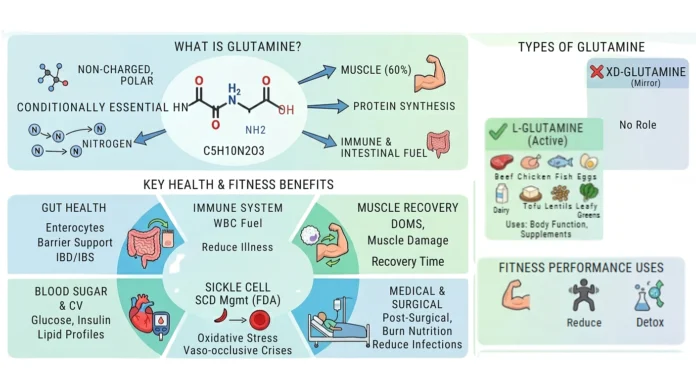
Glutamine is the most abundant free amino acid circulating in the human body, accounting for more than 60% of the total free amino acid pool in skeletal muscle. It serves as a critical building block for proteins, a primary fuel source for rapidly dividing cells including immune and intestinal cells and a key player in nitrogen transport between tissues. Despite its abundance, glutamine occupies a unique and often misunderstood position in nutrition science: it is classified as a conditionally essential amino acid.
What Is Glutamine?
Glutamine is a non-charged, polar amino acid with the molecular formula C₅H₁₀N₂O₃. It is synthesized primarily in skeletal muscle, the lungs, and the liver. Its unique biochemical structure allows it to carry and donate nitrogen groups across multiple metabolic pathways, making it indispensable for:
- Protein synthesis as a structural amino acid in virtually all body proteins
- Nucleotide biosynthesis donating nitrogen for the synthesis of DNA and RNA
- Gluconeogenesis serving as a substrate for glucose production in the liver and kidneys
- Acid-base balance the kidneys use glutamine to excrete ammonia and regulate blood pH
Types of Glutamine
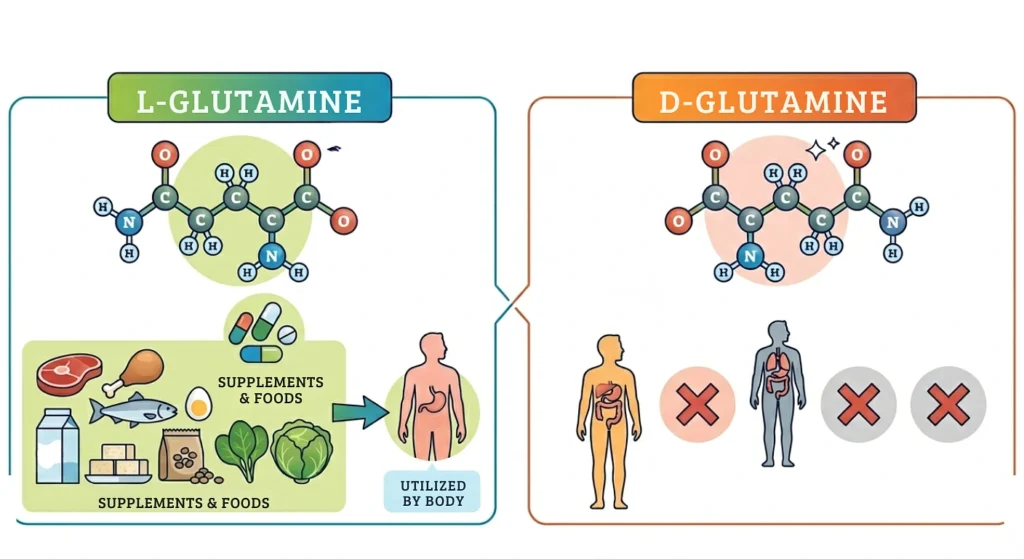
L-Glutamine
The biologically active form found in food and most supplements. L-glutamine is the form naturally synthesized and utilized by the human body. It is the standard form used in clinical research and the version found in protein-rich foods such as beef, chicken, fish, eggs, dairy, tofu, lentils, and leafy greens like spinach and cabbage.
D-Glutamine
The mirror-image isomer of L-glutamine. D-glutamine appears to have little to no significant role in mammalian biology and is not meaningfully utilized by the human body.
In practice: When you see “glutamine” on a supplement label without further specification, it almost always refers to L-glutamine, the active and relevant form.
Top Health & Fitness Benefits of Glutamine
1. Gut Health & Intestinal Barrier Integrity
Glutamine is the primary energy substrate for enterocytes the epithelial cells lining the small intestine. These cells have an exceptionally high turnover rate and depend on a steady supply of glutamine to maintain structure and function. When glutamine is depleted, the tight junctions between intestinal cells can weaken, potentially increasing intestinal permeability a condition commonly referred to as “leaky gut.”
Clinical research supports the use of glutamine supplementation in managing:
- Inflammatory Bowel Disease (IBD) including Crohn’s disease and ulcerative colitis
- Irritable Bowel Syndrome (IBS)
- Chemotherapy- and radiation-induced intestinal damage
- Leaky gut syndrome helping restore barrier function and reduce systemic inflammation triggered by bacterial translocation
A number of gastroenterologists and integrative medicine practitioners now regularly recommend glutamine as part of gut-healing protocols, particularly at doses of 10–30 grams per day in clinical settings.
2. Immune System Support
White blood cells particularly lymphocytes and macrophages are glutamine-dependent cells. They consume glutamine at rates comparable to, or even exceeding, their glucose consumption. During high-volume athletic training or periods of illness and physiological stress, plasma glutamine levels can fall significantly, directly impairing immune cell proliferation and function.
This helps explain the well-documented phenomenon of increased upper respiratory tract infections in endurance athletes and military personnel during peak training phases. Studies suggest that maintaining glutamine levels through supplementation can help:
- Preserve lymphocyte count and function during heavy training
- Reduce the incidence of post-exercise illness
- Enhance the immune response following surgery or trauma
3. Muscle Recovery & Reduced Soreness
During intense resistance or endurance exercise, muscle tissue is broken down and glutamine is released from skeletal muscle stores into circulation. This systemic demand can lower intramuscular glutamine concentrations by as much as 50% following a single exhaustive training session.
Research on glutamine’s role in recovery indicates it can:
- Reduce delayed onset muscle soreness (DOMS) following eccentric exercise
- Decrease markers of muscle damage (such as creatine kinase levels)
- Shorten subjective recovery time, allowing athletes to train at high intensity more frequently
- Support glycogen resynthesis by providing a gluconeogenic substrate post-exercise
4. Reduced Complications from Medical & Surgical Stress
Some of the strongest clinical evidence for glutamine supplementation exists in critical care and surgical medicine. During major surgery, trauma, or severe burns, the body enters a catabolic state in which glutamine is consumed at a rate far exceeding its production. This glutamine deficit is associated with increased infection risk, prolonged wound healing, and higher mortality in critically ill patients.
Clinical applications supported by evidence include:
- Post-surgical nutrition reducing infection rates and hospital stay duration
- Burn patients improving nitrogen balance and immune defense
- Critically ill patients in intensive care reducing bacterial translocation from the gut
- Bone marrow transplant patients decreasing infection complications
Intravenous and enteral glutamine supplementation is now considered standard of care in many clinical nutrition protocols for critically ill patients.
5. Sickle Cell Disease Management
One of the most significant recent milestones in glutamine research is the FDA approval of prescription L-glutamine (brand name: Endari) for the management of sickle cell disease (SCD). Approved in 2017, Endari is indicated to reduce the acute complications of SCD including painful vaso-occlusive crises in patients aged 5 years and older.
The mechanism is linked to glutamine’s role in increasing the NAD redox potential of sickle red blood cells, reducing their oxidative stress and decreasing their tendency to clump and obstruct blood vessels.
6. Blood Sugar & Cardiovascular Risk
Emerging clinical research suggests that regular glutamine supplementation may benefit individuals with type 2 diabetes and related metabolic conditions. Studies using supplementation periods of approximately 6 weeks have reported:
- Modest reductions in fasting blood glucose and HbA1c
- Improvements in insulin sensitivity
- Reductions in blood pressure
- Favorable changes in lipid profiles (lowering LDL and triglycerides)
These findings are promising, though the field would benefit from larger, longer-duration randomized controlled trials to confirm these effects.
Uses in Fitness Performance
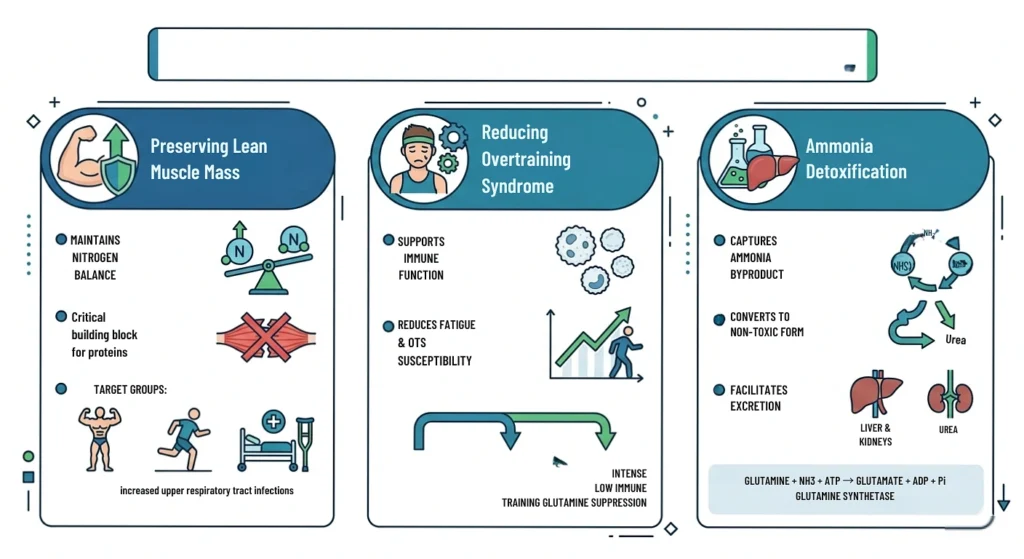
Preserving Lean Muscle Mass (Anti-Catabolism)
The single largest storage site of glutamine in the body is skeletal muscle. During caloric deficits, extended training camps, or illness-related muscle wasting, supplemental glutamine helps maintain nitrogen balance and mitigate muscle protein breakdown. This makes it particularly relevant for:
- Contest preparation in bodybuilders and physique athletes
- Endurance athletes during high-volume training blocks
- Patients undergoing cancer treatment or recovering from surgery with risk of muscle wasting
Reducing Overtraining Syndrome
Chronic suppression of immune function and persistent fatigue in high-performance athletes sometimes termed overtraining syndrome (OTS) has been correlated with chronically low plasma glutamine levels. While glutamine is not a cure for overtraining, maintaining adequate levels appears to reduce susceptibility to its immunological consequences.
Ammonia Detoxification
Intense exercise generates ammonia as a byproduct of accelerated amino acid catabolism. Excess ammonia is neurotoxic and contributes to central and peripheral fatigue. Glutamine, via the glutamine synthetase reaction, plays a central role in capturing and neutralizing ammonia converting it into a non-toxic form for transport to the liver and kidneys for excretion as urea.
What the Evidence Actually Say
It is important to be clear about where the science is strong and where it remains uncertain:
| Claim | Evidence Strength |
|---|---|
| Gut barrier integrity & IBD support | Moderate–Strong |
| Post-surgical / critical care recovery | Strong |
| Sickle cell disease (Endari) | Strong (FDA-approved) |
| Immune function during heavy training | Moderate |
| Reducing muscle soreness (DOMS) | Moderate |
| Muscle mass building in healthy adults | Weak |
| Strength & power performance gains | Weak–Mixed |
| Blood sugar management in T2D | Preliminary |
The overall takeaway is that glutamine is not a muscle-building supplement in the conventional sense it will not significantly increase muscle mass or strength in well-nourished, healthy individuals beyond what training and adequate protein intake already provide. Its primary value lies in recovery, gut health, immune preservation, and clinical applications.
“The most abundant amino acid in your body isn’t abundant by accident it’s abundant because it’s essential to nearly everything.”
Glutamine is not a miracle supplement. It will not transform your physique overnight or replace the fundamentals of good training and nutrition. But dismissing it entirely would be equally misguided.
This article is intended for educational purposes only and does not constitute medical advice. Consult a qualified healthcare professional before beginning any supplementation regimen.