


Key Takeaways
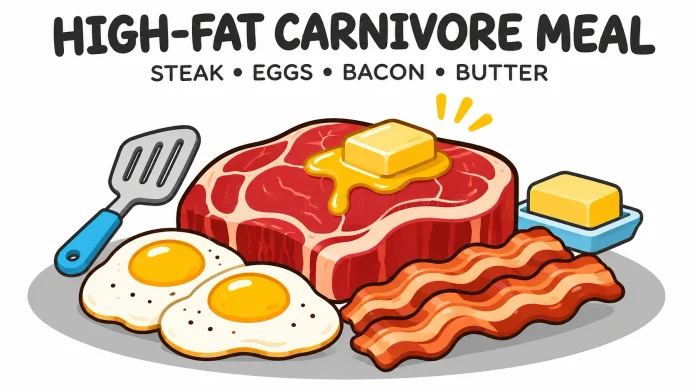
- A plate of steak, two eggs, butter and bacon totals near 990 calories, with about 74 grams of fat and 78 grams of protein.
- Saturated fat on that plate reaches about 33 grams, close to two and a half times the American Heart Association’s daily limit for a 2,000-calorie diet.
- The meal has almost no carbohydrate and no fiber at all.
- A large survey of meat-only eaters found high LDL cholesterol among those who shared blood results.
- People with heart disease, high cholesterol, diabetes or kidney problems should see a doctor before eating this way often.
One frying pan and four foods make up the meal on the table here. Cooked in the order most people would cook them, it goes bacon, then eggs, then a ribeye, with butter melted over the steak at the end. Following that order, each step below shows what the food adds to the plate, using USDA nutrition data.
Three Slices Of Bacon, And They Carry Most Of The Salt
Bacon goes into a cold pan so its fat melts out slowly. Once crisp, three pan-fried slices give the plate around 126 calories, 9 grams of protein and 9.5 grams of fat. Saturated fat from the three slices comes to about 3 grams.
Sodium is the figure worth watching here. At roughly 190 milligrams per slice, the bacon alone puts more than 570 milligrams of sodium on the plate, and no other food in this meal comes close to it.
Two Eggs, Which Add The Day’s Biggest Dose Of Cholesterol
Cracked into the bacon fat, two large eggs bring 144 calories, 12.6 grams of protein and 9.6 grams of fat. Of that fat, 3.2 grams is saturated.
All of an egg’s cholesterol sits in the yolk, at about 186 milligrams apiece. Two yolks therefore put 372 milligrams on the plate, which is more than the steak, the butter and the bacon supply between them. Fried in bacon fat, the eggs will also soak up some extra fat from the pan, and the USDA figures above leave that out.
An 8-Ounce Ribeye, The Heaviest Item On The Plate
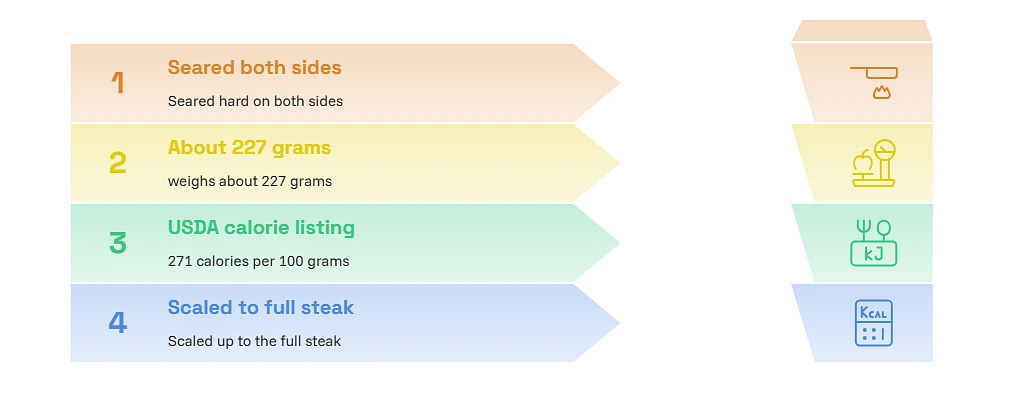
Seared hard on both sides, an 8-ounce ribeye weighs about 227 grams. USDA lists a grilled ribeye, with its outer fat trimmed away, at 271 calories per 100 grams. Scaled up to the full steak, that gives:
- 615 calories.
- 56 grams of protein.
- 43 grams of fat, including 19 grams saturated.
- 177 milligrams of cholesterol.
Leaving The Fat Cap On Raises Every Figure
A ribeye served with its rim of fat, or graded higher for marbling, holds noticeably more fat than the trimmed cut measured here. Anyone counting carefully should weigh the steak raw and check the grade on the label.
A Tablespoon Of Butter Melted Over The Steak
As the steak rests, a tablespoon of butter goes on top and runs down the sides. It weighs only 14 grams. Even so, it carries 102 calories and 11.5 grams of fat, and 7.2 grams of that fat is saturated. Protein in butter is close to nothing, so this last step adds fat and calories alone.
What The Finished Plate Adds Up To
Summing the four steps gives the full meal:
- 987 calories.
- 78 grams of protein.
- 74 grams of fat.
- 33 grams of saturated fat.
- about 600 milligrams of cholesterol.
- about 1 gram of carbohydrate.
- 0 grams of fiber.
Each gram of fat yields nine calories, whereas a gram of protein yields four. Worked through, fat supplies about two-thirds of this meal’s energy, protein supplies nearly all the rest, and carbohydrate barely registers. For someone who needs 2,000 calories a day, the plate covers half of it in one sitting.
Heart Doctors And Researchers Judge A Plate
The Saturated Fat Is Well Past The Recommended Limit
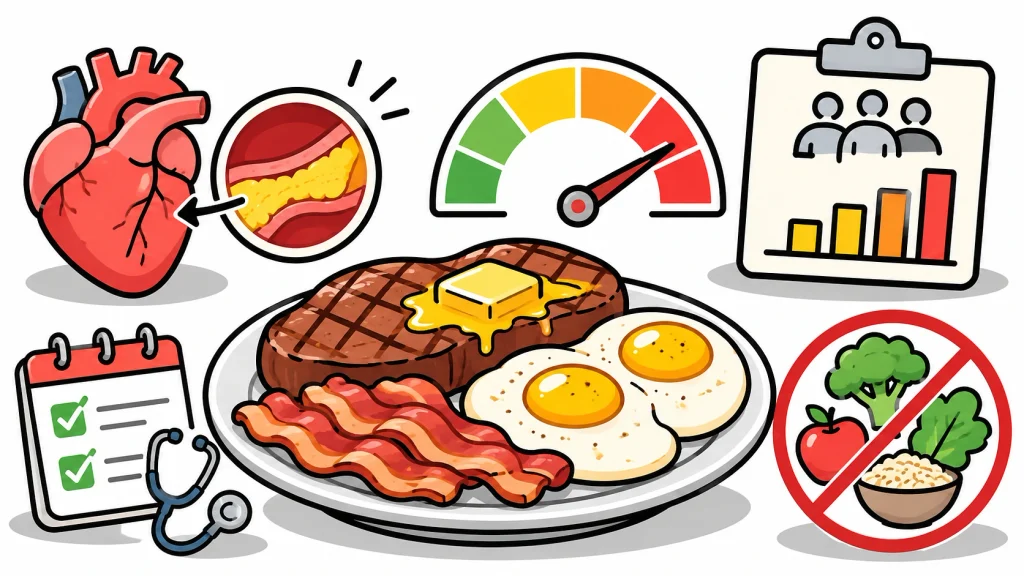
The American Heart Association recommends keeping saturated fat under 6% of daily calories, or about 13 grams for a 2,000-calorie diet. With some 33 grams, this one meal goes through more than two days of that allowance.
Harvard Health Publishing explains in its guide to the carnivore diet and its risks that animal fat is mostly saturated, and that saturated fat raises LDL, the cholesterol tied to heart disease.
Meat-Only Eaters Reported High LDL In The Largest Survey So Far
In 2021, a Harvard-affiliated team surveyed 2,029 adults who had eaten a meat-only diet for at least six months. Most described good health and satisfaction with the diet. For the group who shared lipid results, however, average LDL cholesterol stood at 172 mg/dL, a level the authors called markedly elevated. Their HDL and triglyceride levels looked healthy.
All of the answers were self-reported, and the authors accepted their critics’ warnings that the results could not be generalized. Kate Patton, a registered dietitian quoted by Cleveland Clinic, notes that most of the benefits claimed for this diet rest on personal stories, with little research behind them.
Fiber Is Missing Altogether
No fruit, vegetable, grain or bean appears on the plate. Harvard nutrition professor Walter Willett has warned that a menu of beef, butter, bacon and eggs leaves people short of fiber and of the protective compounds found in plants.
Get A Cholesterol Test Before Making This Plate A Habit
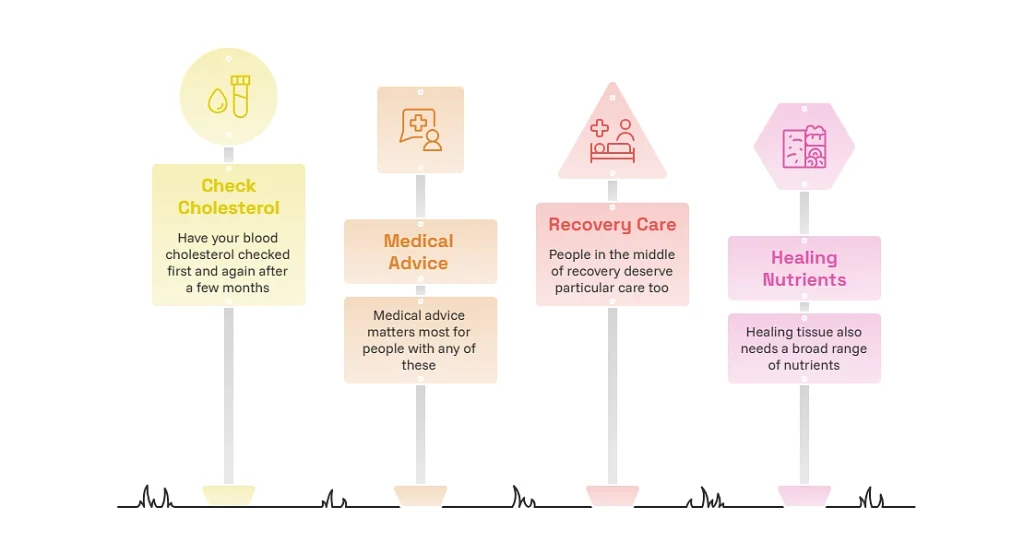
An occasional steak-and-eggs breakfast is a different matter from eating this way at every meal. Should you plan to try it for weeks or months, have your blood cholesterol checked first and again after a few months, so that you and your doctor can see how your body handles the extra saturated fat. Medical advice matters most for people with any of these:
- high LDL cholesterol or a family history of early heart disease.
- heart disease or a past stroke.
- diabetes managed with insulin or tablets that lower blood sugar.
- kidney disease.
People in the middle of recovery deserve particular care too. After surgery, patients usually follow a set plan from their care team, as this explainer on why knee gatch is avoided after a hysterectomy shows. Healing tissue also needs a broad range of nutrients, and anyone tracking their ankle injury recovery time would do well to ask before narrowing their diet.
References
- Harvard Health Publishing, What is the carnivore diet?
- Lennerz BS, Mey JT, Henn OH, Ludwig DS. Behavioral Characteristics and Self-Reported Health Status among 2029 Adults Consuming a “Carnivore Diet”. Current Developments in Nutrition, 2021.
- Kirwan R, Mallett GS, Ellis L, Flanagan A. Limitations of Self-reported Health Status and Metabolic Markers among Adults Consuming a “Carnivore Diet”. Current Developments in Nutrition, 2022.
- Cleveland Clinic, Is the Carnivore Diet a Healthy Way To Eat?
- USDA FoodData Central values for grilled ribeye, large egg, butter and pan-fried bacon