


Quick Takeaway:
When seasonal illness starts, most people either wait too long or go straight to the emergency room. Both choices delay proper treatment.
- Identify your symptoms early – fever, sore throat, body aches, cough, or congestion are your first signals.
- Act within the first 48 hours – this is your most important treatment window.
- Go to a walk-in or urgent care clinic – not the ER, unless symptoms are severe.
- Bring your insurance card and medication list – it speeds up your intake.
- Ask for a rapid test – flu, strep, and COVID-19 results come back in minutes.
- Complete your full prescription – finish antivirals or antibiotics exactly as directed.
- Rest, hydrate, and watch for changes – return if symptoms worsen after 48–72 hours.
When to Go Directly to the Emergency Room
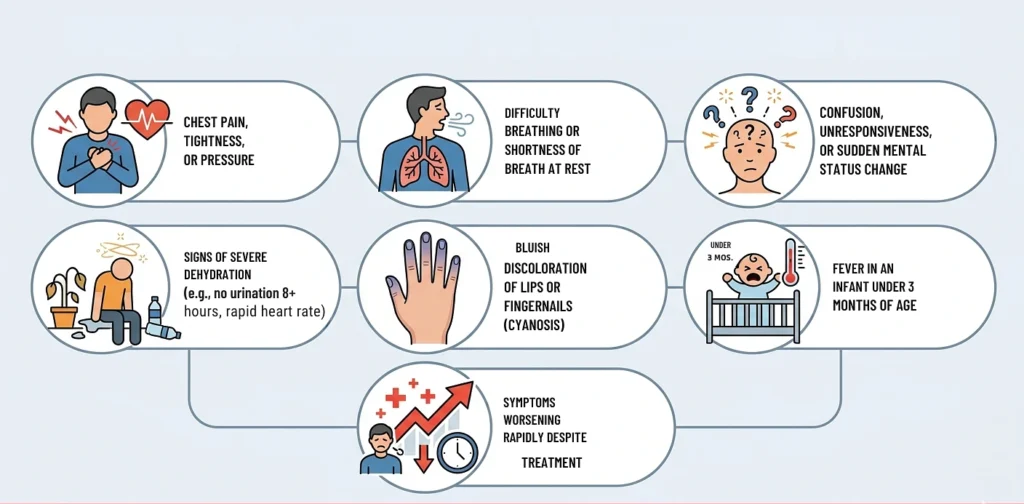
Urgent care clinics are the right choice for mild to moderate seasonal illness. However, certain symptoms require immediate emergency evaluation. Go directly to the ER or call 911 if you experience:
- Chest pain, tightness, or pressure.
- Difficulty breathing or shortness of breath at rest.
- Confusion, unresponsiveness, or sudden mental Health status change.
- Signs of severe dehydration no urination for 8+ hours, rapid heart rate, dizziness.
- Bluish discoloration of lips or fingernails (cyanosis).
- Fever in an infant under 3 months of age.
- Symptoms worsening rapidly despite treatment.
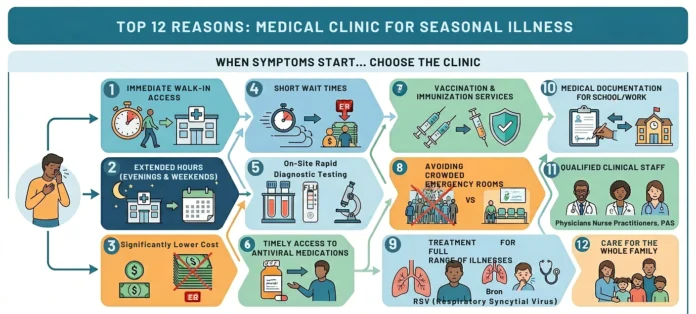
Top 12 Reasons Why a Medical Clinic for Seasonal Illness
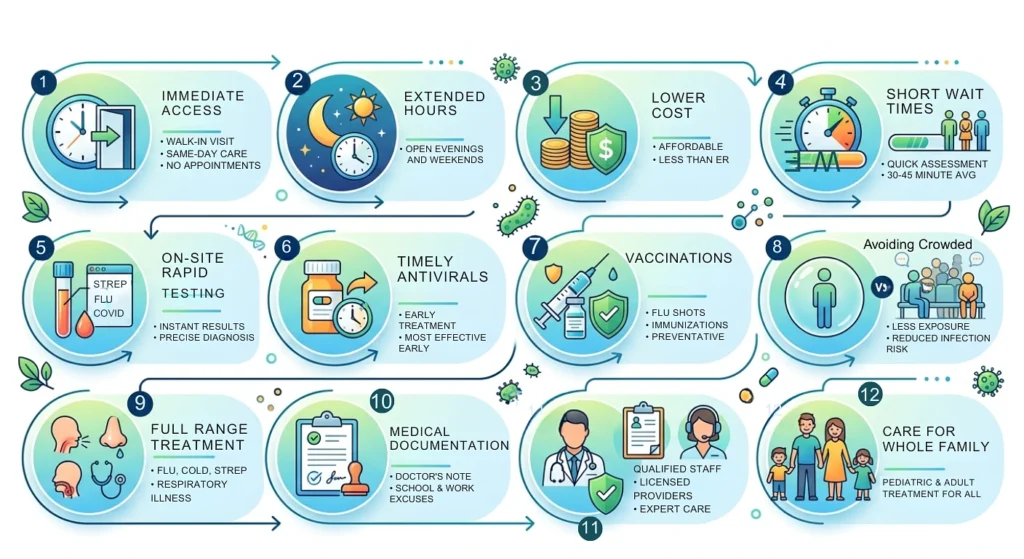
1. Immediate Walk-In Access
When you wake up with a fever or a badly swollen throat, waiting three days for a primary care appointment is not an option. Delayed care is one of the most common reasons seasonal illnesses become prolonged or complicated.
Walk-in clinics operate without appointments. You arrive, check in, and get seen by a licensed provider the same day often within the hour. This immediate access is especially important during the first stage of illness, when the body is most responsive to treatment.
2. Extended Hours Evenings and Weekends
Symptoms frequently worsen in the evening. Fevers tend to rise at night, throat pain intensifies after a full day of activity, and breathing can feel more labored after hours of rest. Most primary care offices are closed by then.
Urgent care clinics stay open until 8 or 9 PM on weekdays and operate through the weekend. This is not just a scheduling convenience it is a clinical advantage. Timely evening or weekend evaluation can prevent a manageable illness from developing into a condition that requires hospital admission by Monday morning.
3. Significantly Lower Cost Than the Emergency Room
Emergency rooms are built and staffed for critical, life-threatening conditions. When a patient with the flu uses ER resources, they are billed at that level and the costs reflect it. An ER visit for a non-emergency illness can generate charges between $1,000 and $3,000 or more, depending on testing and facility fees.
The same clinical evaluation, rapid diagnostics, and prescription at an urgent care clinic typically costs between $100 and $250. For insured patients, urgent care copays are far lower than ER copays. Choosing the right level of care is both medically appropriate and financially responsible.
4. Short Wait Times Faster Assessment and Treatment
In an emergency department, patients are triaged by severity. A patient with flu symptoms will wait behind those with chest pain, trauma, or stroke as they should. During peak flu season, average ER wait times range from two to six hours before a provider begins the initial evaluation.
Urgent care clinics serve a more uniform patient population. Most aim to complete intake, assessment, testing, and treatment within 30 to 45 minutes. For a patient running a high fever, getting seen quickly is not just more comfortable it is better clinical care.
5. On-Site Rapid Diagnostic Testing
Many seasonal illnesses share early symptoms. Flu, strep throat, COVID-19, and RSV can all present with fever, fatigue, and throat discomfort in the first 24 hours. Without a confirmed diagnosis, providers risk prescribing antibiotics for a viral illness or missing a bacterial infection that requires targeted medication.
Urgent care clinics carry point-of-care rapid test kits. Results are ready in 10 to 15 minutes. A confirmed influenza diagnosis changes the treatment plan immediately. A negative strep result tells the provider to investigate further. This on-site diagnostic accuracy leads to faster and more precise treatment decisions without waiting days for outside lab results.
6. Timely Access to Antiviral Medications
This is one of the most critical clinical points during flu season. Antiviral medications such as oseltamivir (Tamiflu) are most effective when started within the first 48 hours of symptom onset. Within this window, antivirals can shorten the illness by one to two days and meaningfully reduce severity.
Patients who wait hoping to feel better on their own lose this treatment window entirely. A walk-in clinic can confirm the diagnosis with a rapid flu test and issue a prescription the same day symptoms begin. That timing is everything.
7. Vaccination and Immunization Services
Prevention is the most effective form of patient care. Annual flu vaccination reduces the risk of influenza illness, related complications, and hospitalization particularly for patients over 65, young children, and those with chronic respiratory conditions such as asthma or COPD.
Most urgent care clinics administer flu shots, COVID-19 boosters, pneumococcal vaccines, and other recommended immunizations throughout the season. For patients without a consistent primary care relationship, a walk-in clinic is a reliable access point for staying current on preventive care. A 15-minute vaccine visit may prevent a two-week illness or a hospital stay.
8. Avoiding Crowded Emergency Rooms
From an infection control standpoint, emergency rooms carry higher exposure risk during respiratory illness season. Patients with varying levels of illness share waiting areas, and droplet-transmitted pathogens circulate freely in high-volume ER environments.
Urgent care clinics have faster patient throughput and a more contained patient population, which reduces the time you spend in a shared space. Beyond personal protection, choosing appropriate-level care keeps emergency departments available for patients who genuinely need critical care a principle that improves outcomes across the entire healthcare system.
9. Treatment for a Full Range of Respiratory Illnesses
Walk-in clinics are equipped to diagnose and treat the full spectrum of illnesses that peak during seasonal months, not just the common cold or flu. Clinical staff regularly manage:
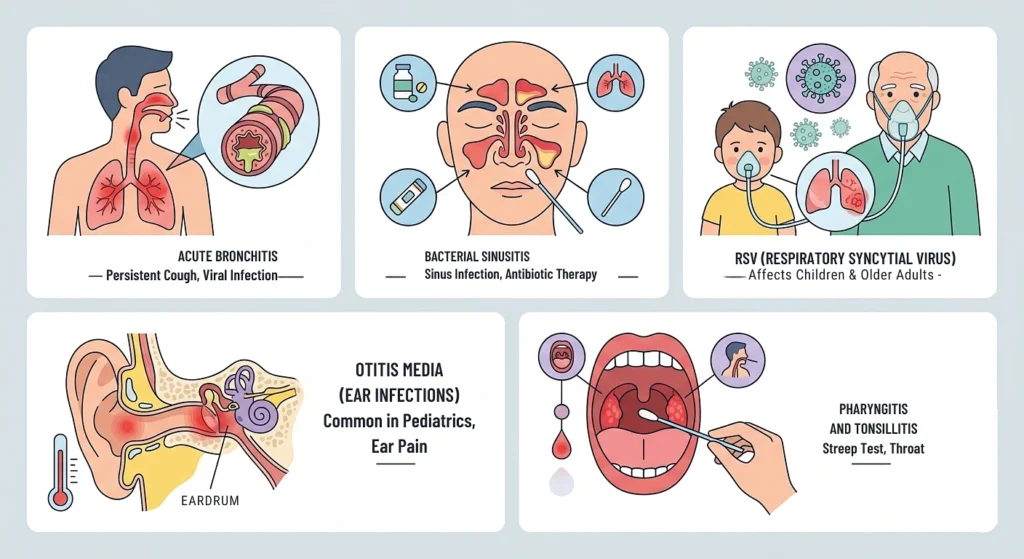
Each patient is assessed individually. Treatment is based on the specific diagnosis not a general assumption about what seasonal illness looks like.
10. Medical Documentation for School and Work
When a provider advises rest and isolation which is standard clinical guidance during active flu or respiratory illness schools and employers often require written documentation. Clinics provide signed medical notes confirming the visit date, diagnosis, and the provider’s recommendation for time away.
This protects patients from workplace or academic consequences and ensures clinical advice is properly communicated. It is a routine part of the discharge process at most walk-in clinics and takes no additional time during the visit.
11. Qualified Clinical Staff Physicians, Nurse Practitioners, and PAs
A common misconception is that urgent care represents a lower standard of medical care. This is not accurate. Walk-in clinics are staffed by board certified physicians, licensed nurse practitioners, and physician assistants all credentialed professionals with direct clinical training in acute illness management.
These providers evaluate symptoms methodically, order and interpret diagnostic tests, prescribe appropriate medications, and recognize when a condition requires escalation to emergency care or specialist referral. The clinical standard applied in an urgent care setting is the same standard that governs all outpatient medical practice. For seasonal illness, this level of expertise is entirely appropriate.
12. Care for the Whole Family
Seasonal respiratory illness spreads quickly within households. When one family member is diagnosed with influenza, others in the same home commonly develop symptoms within 24 to 72 hours. Medication dosing for antivirals, anti-inflammatories, and decongestants differs by age and body weight, so each person requires individual clinical evaluation.
Walk-in clinics serve both adults and children. Bringing the family in together or returning when the next family member becomes symptomatic ensures that each person receives a proper individual assessment rather than a shared treatment assumption.
From Clinical Practice
The majority of patients who come to urgent care during flu season delayed seeking care longer than they needed to. The illnesses we treat flu, strep, bronchitis, sinusitis are manageable conditions when addressed promptly by a qualified provider.
Same-day access, rapid diagnostics, accurate diagnosis, and targeted medication mean most patients leave with a clear treatment plan on the same day they walk in. That is the purpose of a medical clinic. When seasonal illness starts, do not wait come in.