


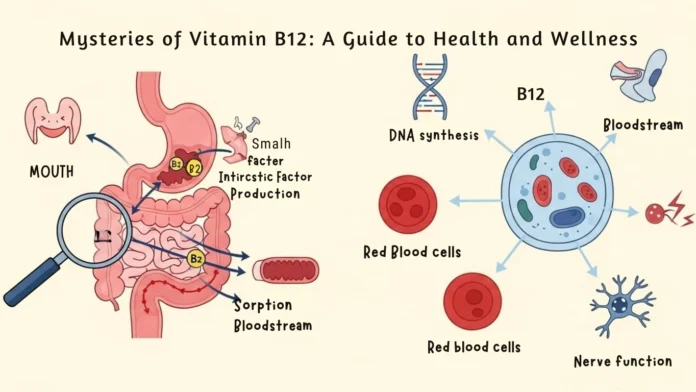
Have you ever felt inexplicably tired, like your get-up-and-go just got up and left, You blame stress, busy days, or maybe too much coffee. But what if it’s something sneakier like your body running low on a little-known nutrient called vitamin B12, This vitamin works quietly behind the scenes, keeping your energy steady, your nerves sharp, and your blood cells healthy. Yet it hides some real mysteries, from its tricky absorption process to why so many people lack it without realizing. I’ll walk you through everything you need to know about vitamin B12 in a straightforward way. We’ll cover what it is, why it matters, where to find it, the warning signs of deficiency, and even the latest research that’s changing how we think about “normal” levels. By the end, you’ll feel empowered to take charge of your wellness.
Discovering What Vitamin B12
Vitamin B12, also known as cobalamin, stands out among vitamins because it contains a cobalt atom right in its center. That makes its structure incredibly complex and beautiful scientists often call it nature’s most elaborate cofactor. Your body uses it in two main active forms: methylcobalamin and adenosylcobalamin. These help with everything from building DNA to keeping your metabolism humming. Unlike many nutrients, B12 comes mostly from animal sources or bacteria that produce it. Plants don’t make it naturally, which creates one of its biggest mysteries right from the start.
Understand Why Vitamin B12 Matters So Much for Your Health
Your body relies on vitamin B12 for some critical jobs. It teams up with enzymes to turn food into energy, helps create healthy red blood cells that carry oxygen everywhere, and supports the protective coating around your nerves called myelin. Without enough, things start going wrong slowly but surely. It prevents megaloblastic anemia, where red blood cells grow too large and can’t function properly. It also keeps homocysteine levels in check an amino acid that, when too high, links to heart issues and brain fog. Recent studies even suggest it plays a role in mood regulation, bone strength health tips. Think of B12 as the behind-the-scenes crew that keeps your body’s daily show running smoothly.
Explore the Fascinate Ways Vitamin B12 Benefits
People often link B12 to quick energy boosts, but its real strengths go much deeper. It supports red blood cell production to fight fatigue from anemia. During pregnancy, adequate levels help prevent serious birth defects like neural tube issues. Some research connects higher B12 to stronger bones and lower osteoporosis risk. It may protect against age-related macular degeneration, an eye condition that blurs central vision. For mood, low B12 often ties to depression symptoms, and fixing it can lift your spirits. It benefits brain function too, potentially slowing memory decline when combined with other factors like omega-3s. And for hair, skin, and nails, it keeps things looking vibrant by preventing issues like discoloration or brittle texture. The catch? You mostly notice these perks when you’re deficient otherwise, it just quietly does its job.
Unraveling the Mystery of Vitamin B12 Absorption
Here’s where things get truly mysterious. Eating B12-rich food doesn’t guarantee your body uses it. In your stomach, acid and enzymes free it from proteins, then it binds to a special substance called intrinsic factor produced by parietal cells. This combo travels to your small intestine for absorption. If anything disrupts this like low stomach acid from aging or meds, or missing intrinsic factor from autoimmune conditions your body can’t grab the B12 properly. That’s why some people need injections to bypass the gut entirely. Supplements in free form absorb more easily, but even then, your body only takes in about 1-2% of very high doses. It’s a delicate system that explains why deficiency sneaks up on so many.
Finding the Best Natural Sources of Vitamin B12
You get vitamin B12 mostly from animal products, since bacteria in animals’ guts produce it. Shellfish top the list clams and oysters pack massive amounts. Organ meats like beef liver come next, followed by fish such as salmon, trout, and tuna. Beef, poultry, eggs, and dairy like milk and yogurt provide solid options too. For plant-based eaters, fortified foods save the day: breakfast cereals, nutritional yeast, and nondairy milks often add B12. Here’s a handy table of top sources based on reliable data (amounts per typical serving, with percentage of the 2.4 mcg daily value for adults):
| Food Source | Serving Size | Vitamin B12 (mcg) | % Daily Value |
|---|---|---|---|
| Beef liver, cooked | 3 ounces | 70.7 | 2,944% |
| Clams, cooked | 3 ounces | 17 | 708% |
| Oysters, cooked | 3 ounces | 14.9 | 621% |
| Fortified nutritional yeast | ¼ cup | 8.3–24 | 346–1,000% |
| Salmon, cooked | 3 ounces | 2.6 | 108% |
| Tuna, canned | 3 ounces | 2.5 | 104% |
| Beef, ground, cooked | 3 ounces | 2.4 | 100% |
| Milk | 1 cup | 1.3 | 54% |
| Yogurt | 6 ounces | 1.0 | 43% |
| Egg, large | 1 whole | 0.5 | 19% |
Identifying Who Faces the Highest Risk of Low Vitamin B12
Certain groups struggle more with B12. Vegans and vegetarians often fall short without fortified foods or supplements, since plants lack it naturally. Older adults over 50 produce less stomach acid, reducing absorption up to 30% may have issues. People with autoimmune conditions like pernicious anemia can’t make intrinsic factor. Gastrointestinal surgeries, such as weight-loss procedures, or disorders like Crohn’s or celiac impair uptake. Long-term use of acid-reducing meds or metformin raises risk too. Even exclusively breastfed babies of vegan moms can develop severe deficiency. It’s not rare studies show 3-15% of people have low levels, often without obvious symptoms at first.
Recognizing the Subtle Signs of Vitamin B12 Deficiency
Deficiency creeps in slowly because your body stores several years’ worth in the liver. Early signs include constant fatigue, weakness, or pale skin. You might notice tingling or numbness in hands and feet like pins and needles that won’t quit. Mood changes, such as irritability or depression, appear often. Memory fog, trouble walking steadily, or a sore, glossy tongue can show up. In severe cases, it leads to anemia, heart palpitations, or even irreversible nerve damage. Kids may have developmental delays. The sneaky part? Symptoms mimic other issues, so many go undiagnosed for years.
How Doctors Test for Vitamin B12 Problems
A simple blood test checks serum B12 levels below 200 pg/mL usually signals deficiency, while 200-300 pg/mL counts as borderline. For accuracy, doctors often measure methylmalonic acid (MMA); elevated levels confirm issues even if B12 seems normal. Homocysteine tests help too, though they’re less specific. If autoimmune causes suspect, they check for intrinsic factor antibodies. Functional tests are gaining ground, especially with new research showing standard cutoffs might miss subtle problems.
Explore Effective Ways to Treat Low Vitamin B12
Treatment depends on the cause. For dietary shortfalls, high-dose oral supplements (1,000-2,000 mcg daily) work well your body absorbs what it needs via passive diffusion. If absorption fails, doctors prescribe injections or nasal sprays. Most people respond quickly, with energy returning in weeks and nerve issues improving over months. Severe cases need ongoing management. The good news? It’s highly treatable, and excess gets safely excreted in urine.
Knowing Your Daily Vitamin B12 Needs
Everyone’s requirements vary slightly by age and life stage. Here’s the recommended daily allowance from trusted health authorities (in micrograms):
| Age Group | Recommended Amount (mcg) |
|---|---|
| Infants 0-6 months | 0.4 (Adequate Intake) |
| Infants 7-12 months | 0.5 (Adequate Intake) |
| Children 1-3 years | 0.9 |
| Children 4-8 years | 1.2 |
| Children 9-13 years | 1.8 |
| Teens 14-18 years | 2.4 |
| Adults 19+ years | 2.4 |
| Pregnant women | 2.6 |
| Breastfeeding women | 2.8 |
Debunking Popular Myths Around Vitamin B12
Myths abound. One big one: B12 shots or supplements give everyone boundless energy. Truth is, they only help if you’re deficient otherwise, no extra pep. Another: Seaweed or fermented foods like tempeh provide plenty. Most don’t have reliable active B12. People think sublingual drops absorb better than pills, but studies show they’re equivalent. And the idea that you can’t overdose? Mostly true, but very high intakes might link to minor risks like fractures in some groups.
Revealing Exciting New Research on Vitamin B12
As of 2025, fresh studies challenge old ideas. One from UCSF found that even “normal” B12 levels (above standard cutoffs) link to slower brain processing and more white matter damage in older adults suggesting we might need higher optimal ranges to protect cognition. Other research highlights B12’s role in immune response, potentially helping fight viruses by modulating inflammation. It may influence cellular aging and the inflammatory signals cells send out. These findings go beyond classic sources, pointing to B12 as a key player in longevity and brain resilience.
FAQs
Can I get enough B12 from food alone if I’m vegan?
Not reliably from unfortified plants. Use fortified foods or supplements to avoid deficiency.
Do B12 supplements cause side effects?
They’re safe for most, even at high doses. Rare mild issues like acne occur in some.
How long does it take to fix a deficiency?
Energy often improves in days to weeks; full nerve recovery can take months.
Is B12 deficiency reversible?
Yes, if caught early. Delayed treatment risks permanent nerve damage.
Should everyone take B12 supplements?
Not necessarily if your diet includes animal products and you feel great. At-risk groups benefit most.
What’s the best form of B12 supplement?
Cyanocobalamin is cheapest and effective; methyl or adenosyl suit some preferences, but differences are small.
Can high B12 levels be harmful?
From food or supplements, rarely. Very high from injections might signal other issues, so check with a doctor.