

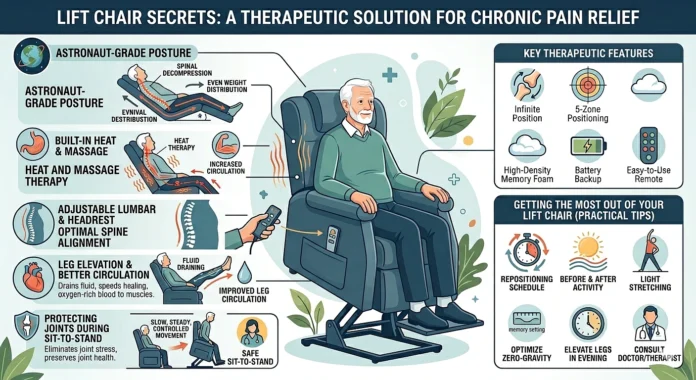
A lift chair is a motorized recliner that helps you sit and stand without straining your joints. But beyond mobility, it works as a therapeutic device offering zero-gravity positioning, built-in heat and massage, leg elevation, and spinal support. For people with arthritis, fibromyalgia, or chronic back pain, a lift chair provides real, daily pain relief without medication.
How Lift Chairs Target Chronic Pain
1. Zero-Gravity Positioning
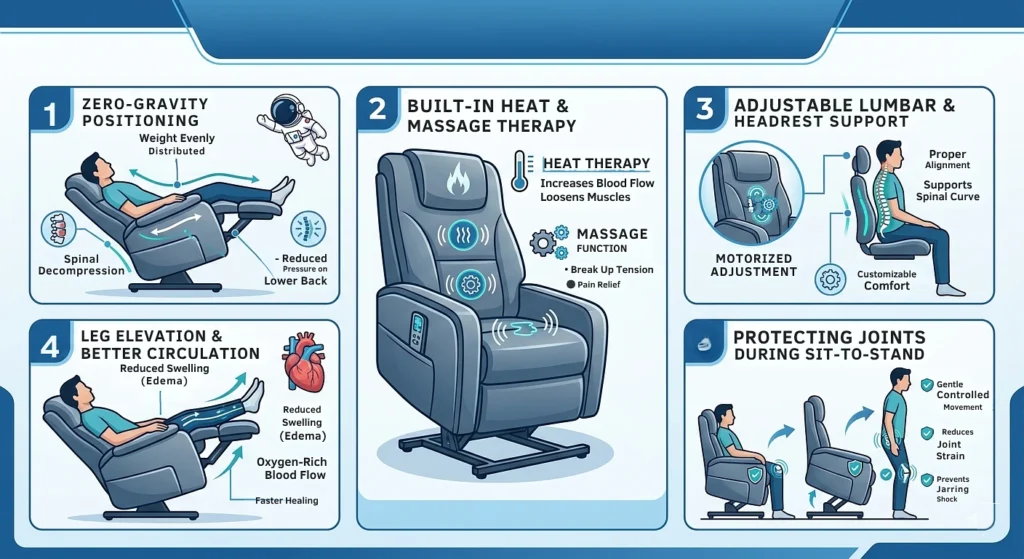
This feature is borrowed directly from NASA. During liftoff, astronauts recline at a specific angle to distribute gravitational forces evenly across the body. Lift chairs replicate this posture.
Body weight spreads across the entire frame instead of concentrating on the spine, hips, and lower back. For people with sciatica, herniated discs, or lumbar compression, this position can bring near-immediate relief.
The spine decompresses. Pressure on nerve roots eases. Back muscles stop working overtime just to keep you upright.
2. Built-In Heat and Massage Therapy
Many lift chairs include integrated heat and vibration massage systems and their benefits are well-documented.
Heat therapy increases blood flow to targeted areas, loosening tight muscles and soothing inflamed joints. It’s especially effective for arthritis sufferers dealing with morning stiffness.
Massage functions break up muscle tension, stimulate circulation, and trigger the release of endorphins the body’s natural painkillers. Together, heat and massage essentially bring physical therapy home, available at the press of a button, any time of day.
3. Adjustable Lumbar and Headrest Support
Sitting in a chair that doesn’t support your spine is one of the most common causes of worsening chronic pain.
Modern therapeutic lift chairs offer motorized, adjustable lumbar and headrest support. You can fine-tune each zone to match your spine’s natural curve, maintaining proper alignment throughout the day.
This level of customization is something most standard recliners and office chairs simply cannot offer.
4. Leg Elevation and Better Circulation
For those dealing with edema, poor circulation, or leg pain, elevating the legs above heart level is a game-changer.
Infinite-position lift chairs make this effortless. Fluid drains away from swollen ankles and feet. Oxygen-rich blood reaches tired muscles faster. Healing speeds up naturally.
This is especially helpful for individuals managing peripheral artery disease, post-surgical recovery, or deep vein thrombosis risk.
5. Protecting Joints During Sit-to-Stand
The sudden “plop” of sitting down sends a jarring shock through the hips, knees, and spine. Pushing yourself up strains already-compromised joints and often requires a caregiver’s help.
Lift chairs eliminate this stress entirely. The motorized transition is slow, steady, and controlled. Over time, this protection helps preserve joint health and reduces cumulative damage from daily movement.
Key Therapeutic Features
Not all lift chairs are created equal. Here’s what matters most for genuine pain relief:
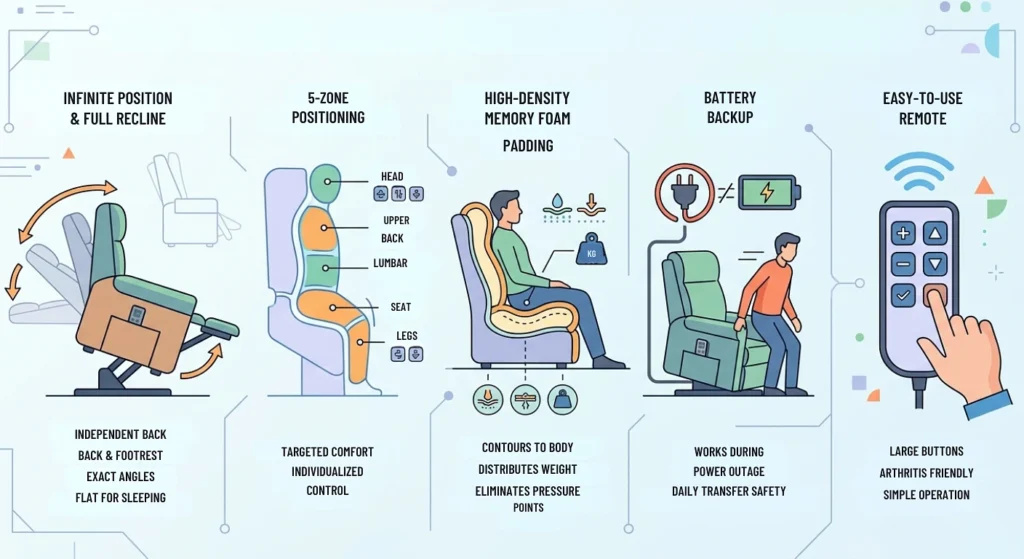
- Infinite Position / Full Recline Allows the back and footrest to move independently. You can find the exact angle that brings relief whether a gentle tilt, full flat position for sleeping, or anything in between.
- 5-Zone Positioning Independent control over the head, upper back, lumbar, seat, and legs. This lets you target specific pain points rather than settling for a one-size-fits-all recline.
- High-Density Memory Foam Padding Memory foam contours to your body, distributing weight evenly and eliminating pressure points. Essential for anyone spending long hours in their chair.
- Battery Backup Ensures the chair functions during a power outage. For those who rely on it for daily transfers, this is a quiet but critical safety feature.
- Easy-to-Use Remote For those with limited hand strength or dexterity common with arthritis a large-button or wireless handset makes all the difference.
Getting the Most Out of Your Lift Chair for Chronic Pain Relief
Owning a lift chair is only the first step. How you use it determines how much relief you actually get. Here are practical solutions to maximize its therapeutic value every day.
Set a Repositioning Schedule
Staying in one position too long even a comfortable one causes stiffness. Set a timer to shift positions every 45 to 60 minutes. Use the chair’s motorized controls to alternate between upright, reclined, and zero-gravity positions throughout the day.
This simple habit keeps muscles active, improves circulation, and prevents the deep aching that comes from prolonged static posture.
Use Heat Before Activity, Massage After
Timing your heat and massage therapy makes a real difference.
Apply heat for 15–20 minutes before physical activity or morning movement it loosens stiff joints and prepares muscles for motion. Use the massage function after activity or in the evening to release built-up tension and promote recovery overnight.
Pair the Chair With Light Stretching
A lift chair reduces strain, but gentle movement keeps joints healthy. While seated, perform simple ankle circles, knee lifts, or shoulder rolls. Use the chair’s raised position to safely transition into standing stretches with reduced fall risk.
Even five minutes of light movement paired with your chair’s support can significantly reduce daily pain levels.
Optimize Your Zero-Gravity Position
Not every zero-gravity preset feels the same for every body. Experiment with slight adjustments to the lumbar and headrest until pressure on your lower back fully releases. Your thighs should feel weightless, and your spine should feel long and decompressed not curled.
Once you find your ideal angle, save it using your chair’s memory function if available, so you can return to it instantly.
Elevate Legs in the Evening for Swelling
If you experience leg swelling or discomfort by end of day, make leg elevation a nightly routine. Recline your chair with legs raised above heart level for 20–30 minutes before bed. This encourages fluid drainage, reduces overnight swelling, and helps you wake up with less stiffness.
Consult Your Doctor or Therapist for a Personalized Plan
Your lift chair works best as part of a broader pain management strategy. Share its features with your physician or physical therapist. They can recommend specific positions, durations, and complementary treatments such as topical anti-inflammatories or targeted exercises that work alongside the chair for maximum relief.