


Back pain is common, but it is manageable. Most cases improve with the right combination of movement, targeted treatment, and lifestyle adjustments. Acting early rather than waiting for the pain to become chronic is always the better choice.
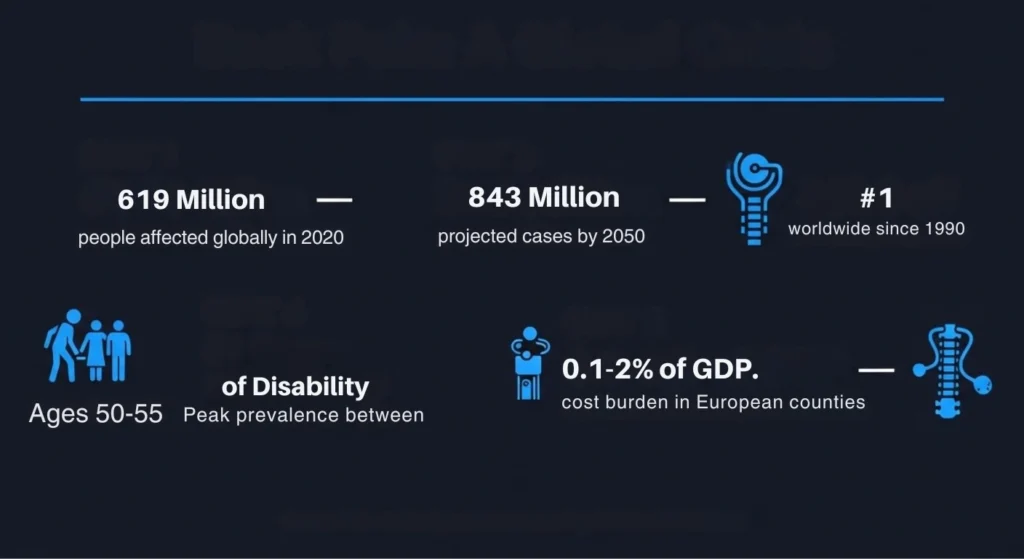
619 million people had low back pain in 2020. That number’s heading to 843 million by 2050 not because spines are getting worse, but because we’re sitting more, moving less, and living longer with bodies that weren’t exactly designed for desk chairs.
The Global Burden of Disease Study 2021, published in Lancet Rheumatology, put those figures out. Back pain has been the leading cause of disability worldwide since 1990 not heart disease, not cancer. A bad back.
What Is Back Pain?
- Back pain is discomfort felt anywhere along the spine from the base of the neck down to the tailbone.
- It is one of the leading reasons people visit a doctor or miss work.
- Pain can be sharp, dull, burning, or aching and may come and go or stay constant.
- It affects people of all ages, though the risk increases after age 30.
- Back pain can be short-term (acute) or long-lasting (chronic, beyond 3 months).
How to Protect Your Back Long-Term

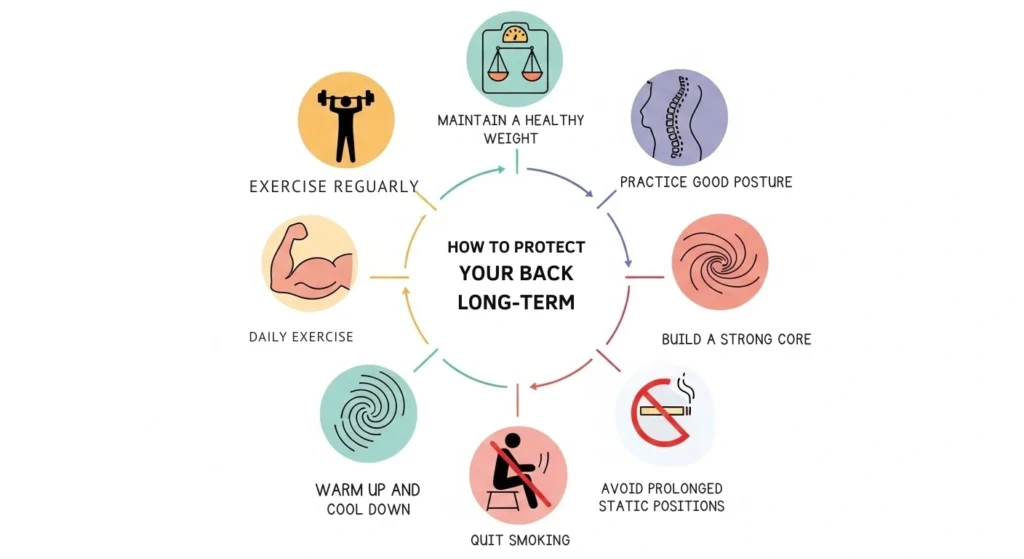
- Exercise regularly with a mix of strength training, stretching, and low-impact cardio.
- Maintain a healthy weight appropriate to your height and build.
- Practice good posture consistently at work, in the car, and at home.
- Build a strong core through consistent daily exercise, not just gym sessions.
- Warm up before physical activity and cool down with stretching afterward.
- Avoid prolonged static positions movement throughout the day keeps spinal structures healthy.
- Quit smoking it impairs nutrient supply to spinal discs and accelerates degeneration.
Common Causes of Back Pain
Muscle and Ligament Issues
- Overstretching or tearing muscles and ligaments from sudden movements or heavy lifting.
- Muscle spasms after physical overexertion.
- Poor posture held over long periods strains the soft tissues around the spine.
Disc Problems
- Herniated (slipped) disc the inner gel of a spinal disc pushes through its outer layer and presses on nerves.
- Bulging discs compress nearby nerve roots, causing sharp or shooting pain.
- Degenerative disc disease discs lose their cushioning ability with age, leading to chronic pain.
Spinal Conditions
- Spinal stenosis narrowing of the spinal canal puts pressure on nerves and the spinal cord.
- Scoliosis an abnormal sideways curve of the spine that can cause pain in adults.
- Spondylolisthesis a vertebra slips forward out of position onto the bone below it.
- Osteoporosis weakened bones can lead to small spinal fractures that cause sudden, severe pain.
Arthritis
- Osteoarthritis wears down the cartilage between spinal joints, causing stiffness and pain.
- Ankylosing spondylitis causes chronic spinal inflammation, leading to a hunched posture over time.
- Rheumatoid arthritis can affect spinal joints and cause ongoing discomfort.
Lifestyle Factors
- Sitting for long hours without proper back support weakens core muscles.
- Excess body weight puts added pressure on the lumbar spine.
- Smoking reduces blood flow to spinal discs and slows healing.
- Lack of regular exercise leaves the back muscles weak and vulnerable to injury.
Other Causes
- Kidney stones or infections can cause referred pain felt in the lower back.
- Sciatica =nerve compression causes pain that travels from the lower back through the buttock and down the leg.
- Pregnancy increases strain on the lower back due to weight distribution changes.
See a Doctor Immediately
- Loss of bladder or bowel control.
- Numbness in the groin or inner thighs.
- Back pain following a fall, accident, or injury.
- Back pain paired with unexplained weight loss or fever.
- Pain that gets progressively worse at night or while lying down.
Treatment Options
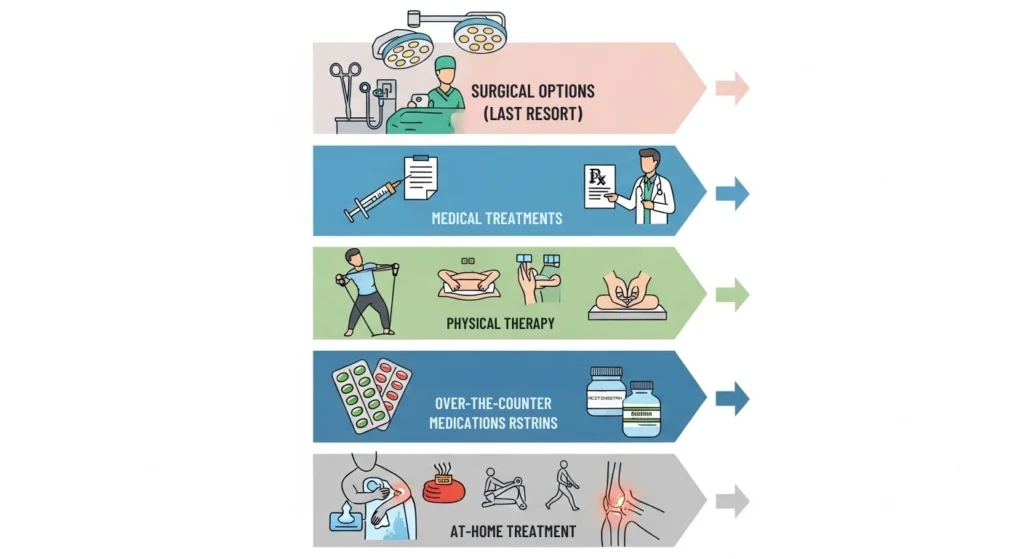
At-Home Treatment
- Apply a cold pack for the first 48 hours to reduce swelling and inflammation.
- Switch to heat therapy after 48 hours to relax tight muscles and improve circulation.
- Take short, gentle walks movement aids recovery faster than complete bed rest.
- Avoid prolonged sitting; stand and stretch every 30–45 minutes.
- Use a supportive mattress and sleep on your side with a pillow between your knees.
Over-the-Counter Medications
- Ibuprofen or naproxen sodium reduce inflammation and ease pain effectively.
- Acetaminophen relieves pain without targeting inflammation useful when NSAIDs are not tolerated.
- Topical creams and gels (e.g., diclofenac gel) applied directly to the painful area offer localized relief.
Physical Therapy
- A physiotherapist designs a tailored exercise program to strengthen the muscles supporting your spine.
- Therapy improves posture, flexibility, and movement patterns that contribute to pain.
- Manual therapy spinal manipulation and mobilization reduces pain and stiffness effectively.
- Consistent home exercise between sessions is critical to long-term improvement.
Medical Treatments
- Prescription muscle relaxants ease severe spasms but require close medical supervision due to dependence risk.
- Corticosteroid injections into the epidural space reduce inflammation around compressed nerves.
- Nerve block injections target a specific nerve root to interrupt pain signals.
- Cognitive Behavioral Therapy (CBT) helps manage chronic pain by changing negative thought patterns related to movement and activity.
- Acupuncture stimulates specific points on the body to reduce pain perception and promote healing.
- TENS (Transcutaneous Electrical Nerve Stimulation) sends low-voltage electrical pulses to block pain signals.
Surgical Options (Last Resort)
- Surgery is considered only after conservative treatments have failed over several months.
- Discectomy removes part of a herniated disc pressing on a nerve.
- Laminectomy relieves pressure on the spinal cord or nerves by removing part of the vertebra.
- Spinal fusion joins two or more vertebrae to stabilize the spine.
- Surgery does not guarantee complete pain relief and carries its own risks.
Pain Relief Tips You Can Use Today

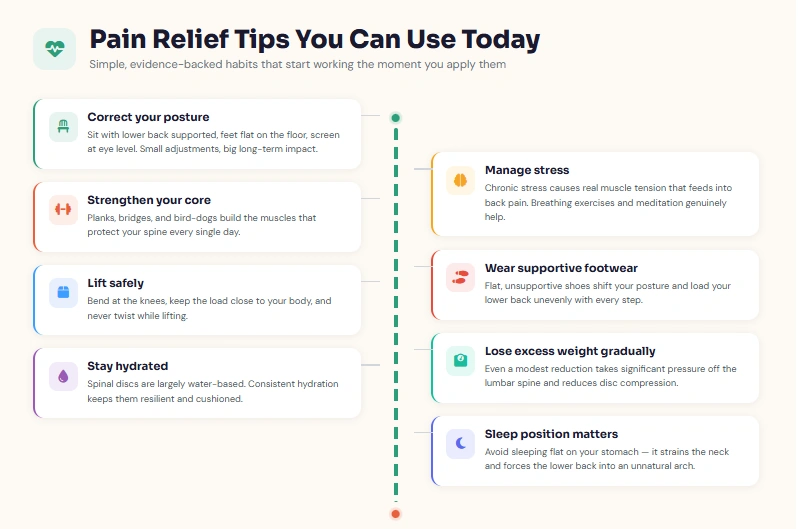
- Correct your posture – sit with your lower back supported, feet flat on the floor, and screen at eye level.
- Strengthen your core – planks, bridges, and bird-dogs build the muscles that protect your spine daily.
- Lift safely – bend at the knees, keep the load close to your body, never twist while lifting.
- Stay hydrated – spinal discs are largely water-based; hydration keeps them resilient.
- Manage stress – muscle tension from chronic stress is a real contributor to back pain breathing exercises and meditation help.
- Wear supportive footwear – flat, unsupportive shoes shift your posture and load your lower back unevenly.
- Lose excess weight gradually – even a modest reduction takes significant pressure off the lumbar spine.
- Sleep position matters avoid sleeping flat on your stomach; it strains the neck and arches the lower back.