


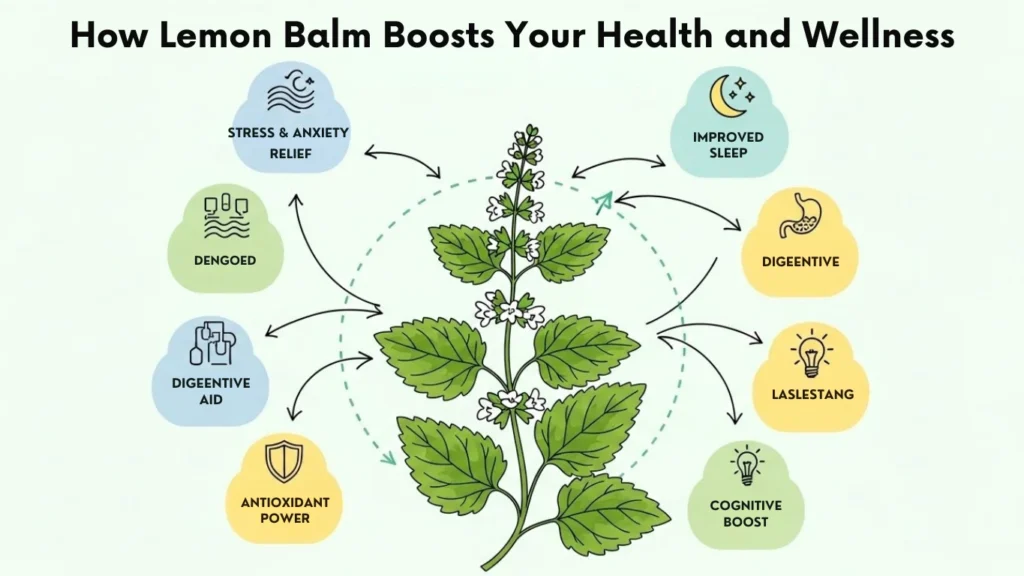
Have you ever felt overwhelmed by a hectic day and wished for something simple to calm your nerves That’s where lemon balm comes in. This unassuming herb, with its fresh lemony scent, has been a go-to natural remedy for centuries. People have turned to it for everything from easing anxiety to settling an upset stomach. We’ll dive into how lemon balm boosts your health and wellness, backed by what we know from traditional use and modern studies. You’ll get a clear picture of its benefits, how to use it safely, and why it might just become your new favorite herb.
What Is Lemon Balm
Lemon balm, or Melissa officinalis, is a perennial plant from the mint family. It grows easily in many gardens, with soft, green leaves that release a bright, citrusy aroma when you brush against them. Native to Europe, the Middle East, and parts of Asia, it’s now found worldwide because it’s so adaptable.
The name “Melissa” comes from the Greek word for honey bee, since bees absolutely love its flowers. Ancient Greeks and Romans used it to soothe stings and calm the mind. Over time, herbalists praised it for lifting moods and supporting digestion. Today, it’s popular in teas, supplements, and even skincare.
What makes it special are compounds like rosmarinic acid, flavonoids, and essential oils. These give it antioxidant, calming, and antiviral properties. Unlike some herbs that taste bitter, lemon balm is pleasantly mild and lemon-like, making it easy to enjoy every day.
Why Does Lemon Balm Boost Health and Wellness
The real power of lemon balm lies in how it interacts with your body gently but effectively. It boosts GABA, a brain chemical that helps you relax without making you feel groggy like some medications can. Its antioxidants fight inflammation, which plays a role in many health issues.
Studies show it can lower stress hormones like cortisol, helping you feel more balanced. For digestion, it relaxes muscles in your gut, easing cramps or bloating. And its antiviral effects make it handy for things like cold sores.
What’s great is that it’s not overwhelming many people notice subtle improvements in mood, sleep, and energy without harsh side effects. In a world full of quick fixes, lemon balm offers steady, natural support for overall wellness.
Where Does Lemon Balm Come From and Grow
Lemon balm thrives in sunny spots with well-drained soil, much like other mints. It’s hardy in many climates and spreads quickly, so gardeners often grow it in pots to keep it contained. You can find it wild in parts of Europe or cultivated in herb gardens everywhere.
Commercially, it’s grown in places like Germany, Italy, and the U.S. for teas and extracts. If you’re interested in trying it fresh, it’s one of the easiest herbs to grow at home even on a windowsill. Just snip leaves as needed, and it’ll keep coming back.
How Lemon Balm Calms Anxiety and Reduces Stress

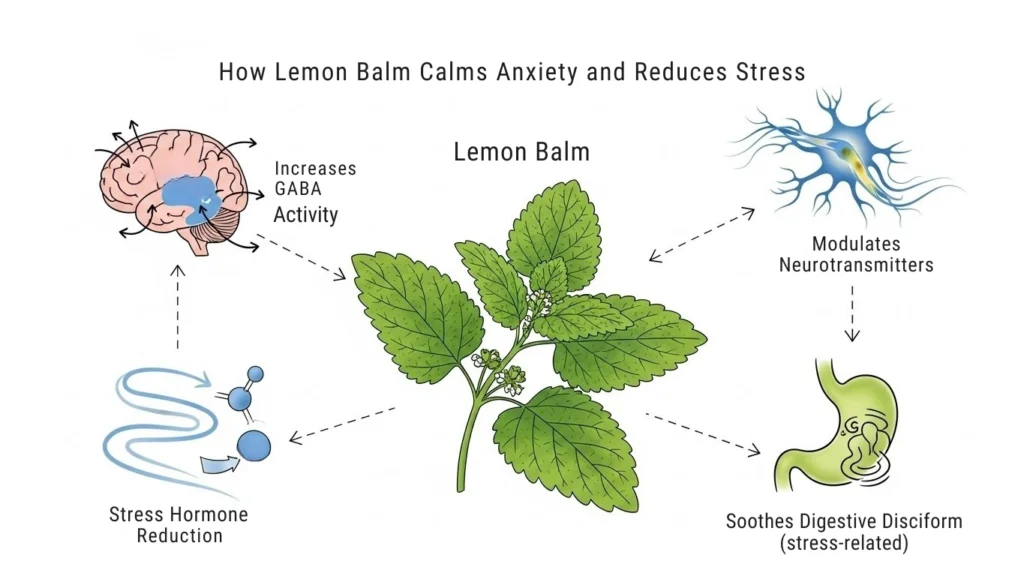
Life can get intense, right Lemon balm shines here. Research, including a 2024 review, shows it helps ease anxiety by boosting GABA activity in the brain. People in studies reported feeling calmer after taking it, especially during stressful situations.
One trial had participants take lemon balm before a lab-induced stress test, and they felt less tense afterward. It’s not a cure-all, but many find a cup of tea in the evening melts away the day’s worries. I love how it provides that gentle unwind without knocking you out.
How Lemon Balm Improves Sleep Quality
Struggling to fall asleep or stay asleep? Lemon balm could help. Recent studies, like one from late 2024, found it increases deep sleep stages while improving how refreshed people feel in the morning.
In another trial with folks who had mild sleep issues, six weeks of lemon balm led to better sleep scores and less daytime fatigue. It works by soothing your nervous system, making it easier to drift off naturally. Pair it with good sleep habits, and you might wake up feeling truly rested.
How Lemon Balm Supports Digestive Health
That post-meal bloating or occasional cramps? Lemon balm has your back. It relaxes the smooth muscles in your digestive tract, helping with gas, indigestion, or even irritable bowel symptoms.
Traditional use backs this up, and modern animal studies show it reduces spasms. A warm tea after dinner often settles things down nicely. It’s especially helpful if stress is messing with your gut common for many of us.
How Lemon Balm Helps with Cold Sores and Skin Issues
Cold sores are no fun, popping up at the worst times. Lemon balm’s antiviral properties target the herpes virus directly. Creams with lemon balm extract shorten healing time and reduce itching in studies.
Its anti-inflammatory effects also soothe irritated skin. Some use it for minor wounds or insect bites. Plus, the antioxidants may support overall skin health by fighting free radicals.
Lemon Balm Benefits Heart Health and Cholesterol
Emerging research is exciting here. A 2024 meta-analysis found lemon balm improves lipid profiles lowering bad cholesterol and triglycerides in some trials.
It may also help regulate blood pressure and heart rate, based on animal and early human studies. While more research is needed, adding it to a heart-healthy lifestyle could offer extra support.
| Benefit | Key Evidence | Typical Dose in Studies |
|---|---|---|
| Lowers Cholesterol | 2024 meta-analysis of RCTs | 500-1000 mg extract daily |
| Supports Blood Pressure | Animal and review studies | Varies, often in tea form |
| Reduces Heart Rate | Preliminary human trials | 300-600 mg |
Lemon Balm Enhances Mood and Cognitive Function
Feeling foggy or down? Lemon balm lifts mood and sharpens focus. Studies show it reduces negative emotions and improves alertness.
In older adults, it helped with agitation and cognitive scores. A combination with other herbs boosted memory in healthy people too. It’s like a gentle brain boost without the jitters from caffeine.
Lemon Balm Acts as an Antioxidant Powerhouse
Free radicals cause damage over time, contributing to aging and disease. Lemon balm is packed with rosmarinic acid and other antioxidants that neutralize them.
Lab tests confirm strong free radical-scavenging ability. This underlies many benefits, from skin protection to overall cellular health.
Ways to Incorporate Lemon Balm into Your Routine
Steep fresh or dried leaves in hot water for 5-10 minutes. It’s refreshing hot or iced.
You can also find capsules, tinctures, or essential oils. For skin, try creams or diluted oil. Start low 1-2 cups of tea daily and see how you feel.
Simple Lemon Balm Tea Recipe
Here’s a basic one: Take a handful of fresh leaves (or 1-2 teaspoons dried). Pour over boiling water, cover, and steep 10 minutes. Add honey if you like it sweeter.
For variety, mix with chamomile for extra calm or peppermint for digestion.
Safety Considerations and Possible Side Effects
Lemon balm is generally safe for most people. Side effects are rare but can include mild nausea or dizziness if you take too much.
Avoid if you have thyroid issues, as it might interfere. It can enhance sedatives, so check with your doctor if you’re on medications. Pregnant or breastfeeding? Talk to a professional first.
Always choose quality sources to avoid contaminants.
| Potential Interaction | What to Watch For | Recommendation |
|---|---|---|
| Thyroid Medications | May reduce effectiveness | Consult doctor |
| Sedatives/Sleep Aids | Increased drowsiness | Start low dose |
| HIV Medications | Possible interference | Seek medical advice |
Growing Your Own Lemon Balm at Home
It’s super easy! Plant in spring, give it sun and moderate water. Harvest leaves before flowering for best flavor.
It repels mosquitoes naturally, so plant near patios. Dry leaves for year-round use.
Comparing Lemon Balm to Other Calming Herbs
Unlike valerian, which can be strongly sedating, lemon balm is milder and uplifting. Compared to lavender, it’s more versatile for internal use.
It pairs well with both for enhanced effects.
Latest Research Highlights on Lemon Balm
As of late 2025, studies continue to support its role in psychological well-being. A comprehensive 2024 review emphasized benefits for anxiety, sleep, and mood with good tolerability.
Newer trials explore its potential in metabolic health and neuroprotection. It’s promising, but always view herbs as complements to healthy habits.
FAQs
Is lemon balm safe to use every day?
Yes, for most people. 1-3 cups of tea or standard supplement doses are fine long-term, but listen to your body.
Can lemon balm help with PMS or menstrual cramps?
Some find it eases cramps due to its muscle-relaxing effects. Traditional use supports this, though more studies would be great.
Does lemon balm interact with coffee or caffeine?
No known issues it might even balance caffeine’s stimulating effects.
How quickly does lemon balm work for anxiety?
Many notice calm within 30-60 minutes from tea or extract.
Is fresh lemon balm better than dried?
Fresh has a brighter flavor, but dried retains most benefits and is convenient.
Lemon balm is a delightful, versatile herb that truly boosts health and wellness in subtle, meaningful ways. Whether you’re sipping tea to unwind or using it for skin relief, it brings a bit of nature’s calm into your life.