


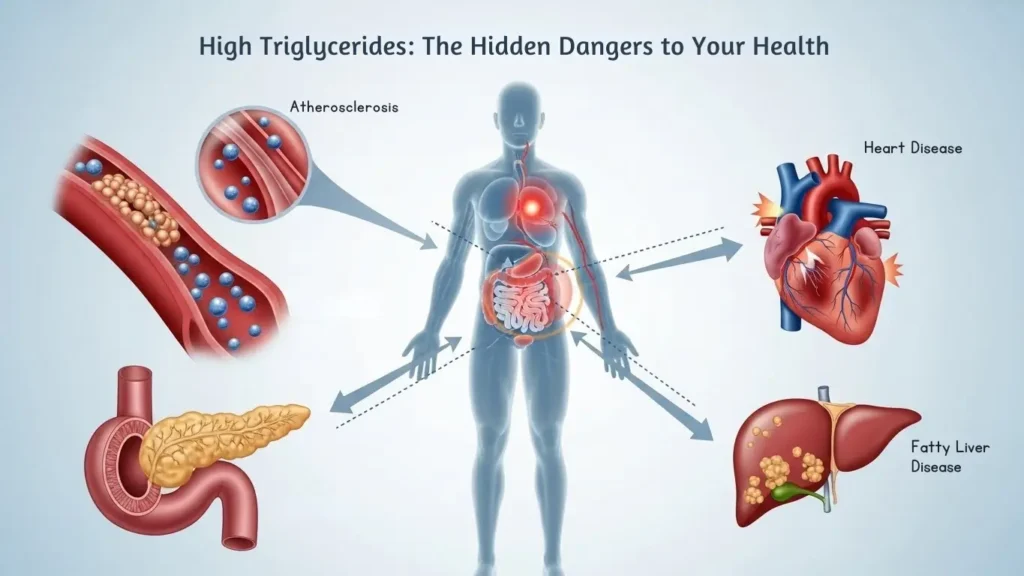
While many people focus on their “bad” cholesterol (LDL), triglycerides the most common type of fat in your body are a critical and often neglected indicator of health. Approximately 25% to 33% of adults live with elevated levels, a condition known as hypertriglyceridemia, which can silently damage your organs before symptoms ever appear.
Abstract: This article is for informational purposes only and does not replace professional medical advice. Always consult a healthcare provider for personalized treatment.
What are Triglycerides
Triglycerides are lipids that store unused calories for future energy use. When you eat, your body converts any calories it doesn’t need immediately into triglycerides, which are then stored in fat cells. If you consistently consume more calories than you burn especially from sugars, refined carbohydrates, or alcoholyour blood levels can become dangerously high.
The Danger Spectrum
Triglyceride levels are measured via a standard lipid panel. For 2025, health organizations classify the results as follows:
- Optimal: Below 100 mg/dL.
- Normal: 100–149 mg/dL.
- Borderline High: 150–199 mg/dL.
- High: 200–499 mg/dL (Increases heart disease risk by roughly 25%).
- Very High: 500 mg/dL and above (Requires immediate medical attention to prevent organ damage).
The Silent Health Dangers
High triglycerides are often referred to as “unseen dangers” because they typically cause no symptoms until a crisis occurs.
1. Hardening of the Arteries (Atherosclerosis)
High triglycerides contribute directly to the thickening and narrowing of artery walls. This process restricts blood flow and significantly raises the risk of heart attack, stroke, and peripheral artery disease.
2. Acute Pancreatitis: A Medical Emergency
When levels exceed 500 mg/dL, and especially above 1,000 mg/dL, the risk of acute pancreatitis—a life-threatening inflammation of the pancreas spikes. A 2025 study highlighted that even levels slightly above 150 mg/dL are linked to more severe cases of pancreatitis in younger patients.
3. Metabolic Syndrome & Type 2 Diabetes
Elevated triglycerides are a primary marker for metabolic syndrome. Research shows a “vicious cycle” where insulin resistance causes the liver to produce more triglycerides, which in turn worsens insulin sensitivity, accelerating the onset of Type 2 diabetes.
4. Fatty Liver Disease (MASLD)
The liver is the primary hub for fat metabolism. When overwhelmed by high triglycerides, it begins storing excess fat internally, which can lead to Metabolic Dysfunction-Associated Steatotic Liver Disease (MASLD), inflammation, and eventual scarring.
New Medical Breakthroughs in 2025
For years, treatment options for severely high triglycerides were limited. However, 2025 has seen several “game-changing” advancements:
- New Triple-Agonist Drugs: Medications like DR10624 target three different receptors (FGF21, glucagon, and GLP-1) to reduce triglycerides by over 60% and liver fat by 63%.
- Tryngolza (Olezarsen): Recently FDA-approved for rare genetic disorders, this drug lowers triglycerides by nearly 50% by inhibiting the protein ApoC-III, which otherwise blocks fat clearance.
Proactive Management Strategies
Most cases of high triglycerides respond exceptionally well to lifestyle modifications:
- Cut Refined Carbs and Sugar: Focus on whole grains and eliminate sugary drinks.
- Increase Omega-3 Intake: Eating fatty fish like salmon or mackerel twice weekly can lower levels.
- Move Regularly: Aim for 150 minutes of moderate aerobic activity weekly to help your body burn stored lipids.
- Limit Alcohol: Even small amounts of alcohol can cause significant triglyceride spikes.
Final Thought
Triglycerides may be invisible, but their impact on your health is not. By paying attention early—through smart lifestyle choices and timely medical guidance—you can prevent silent damage and protect your heart, liver, and metabolic health long before problems arise. Small, consistent actions today can make a life-saving difference tomorrow.