


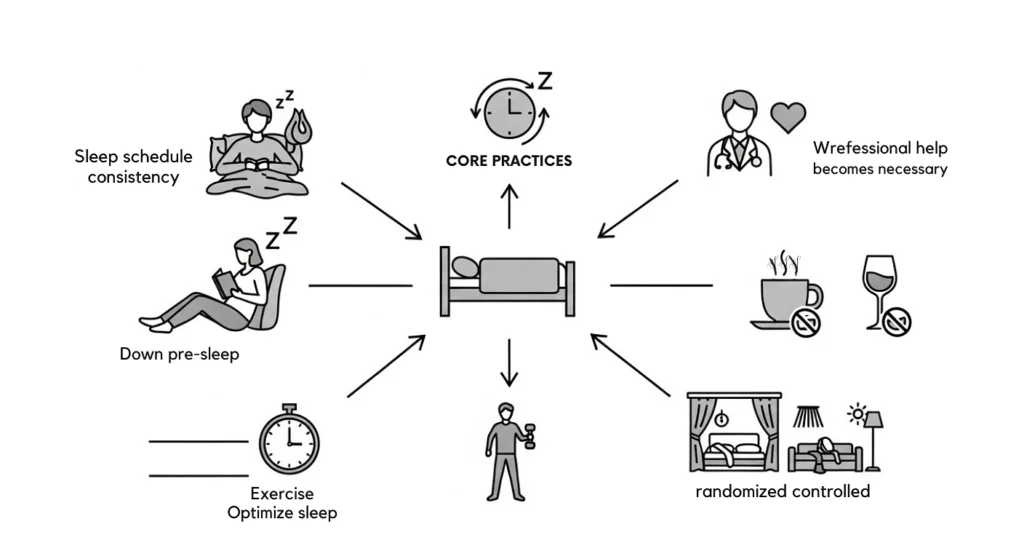
Sleep hygiene refers to the daily habits, routines, and environmental conditions that determine sleep quality. Poor sleep and poor mental health reinforce each other disrupted rest worsens anxiety, depression, and emotional regulation, while mental health struggles make quality sleep harder to achieve. This article covers the core practices that break that cycle: circadian rhythm consistency, pre-sleep wind-down routines, caffeine and alcohol awareness, exercise timing, bedroom environment, and when professional help becomes the right call.
Sleep debt collects interest. Miss enough quality rest and the mental toll arrives fast irritability spikes, small frustrations land harder, decisions that should be simple start feeling impossible. Most people blame stress or a packed schedule. The biology tells a different story.
What is Sleep Hygiene
Sleep hygiene isn’t one habit it’s the full collection of behaviors, routines, and environmental conditions that together determine whether sleep is restorative or not. The National Sleep Foundation defines it as the practices necessary for good nighttime sleep quality and full daytime alertness.
- Timing and consistency when you sleep, wake, and how reliably those times hold.
- Pre-sleep behavior what happens in the hour or two before bed.
- Sleep environment the physical health conditions of the bedroom itself.
The Schedule Sleep
The nervous system doesn’t flip modes instantly. It needs a runway roughly 60 to 90 minutes. Jumping from high-stimulation activity straight into bed and expecting sleep to arrive quickly is physiologically unrealistic for most people.
Blue light from screens suppresses melatonin production. Researchers at Harvard Medical School found in a study published in PNAS that using light-emitting screens before bed delayed melatonin onset, reduced REM sleep, and impaired next-morning alertness compared to reading a printed book. The content consumed matters just as much as the device =news and social media keep the brain emotionally activated in ways that don’t switch off the moment the phone goes down.
A warm shower or bath one to two hours before bed helps more than most people expect:
- Body temperature rises during bathing, then drops during the cooling period afterward.
- That post-bath temperature drop mimics the natural thermal decline the body uses to initiate sleep onset.
- A systematic review and meta-analysis published in Sleep Medicine Reviews confirmed that bathing in water of 40–42.5°C significantly improved both sleep onset latency and overall sleep quality.
Dim the lights an hour before bed, step away from stimulating content, and give the nervous system room to shift.
2. Nicotine Disrupts Sleep
Caffeine and alcohol get most of the attention, but nicotine is a stimulant that directly interferes with sleep architecture. Smoking or vaping close to bedtime keeps the nervous system activated and fragments sleep continuity Harvard Health and the CDC both flag nicotine as a sleep disruptor alongside caffeine.
People who smoke often experience more nighttime waking and lighter sleep overall, partly because nicotine withdrawal begins during the night even after relatively short gaps.
When the Brain Refuses to Quiet Down
Nighttime strips away the distractions that kept intrusive thoughts manageable during the day. For anyone carrying anxiety or depression, that silence doesn’t feel restful it feels loud with everything unresolved.
Writing helps more than it tends to get credit for. A randomized controlled trial from Baylor University, published in the Journal of Experimental Psychology: General, found that spending five minutes writing a concrete to-do list before sleep helped participants fall asleep significantly faster than those who journaled about tasks already completed. Offloading pending items onto paper signals to the brain they are accounted for outside itself it reduces the compulsion to mentally rehearse them through the night.
Caffeine Half-Life Is Longer Than You Think

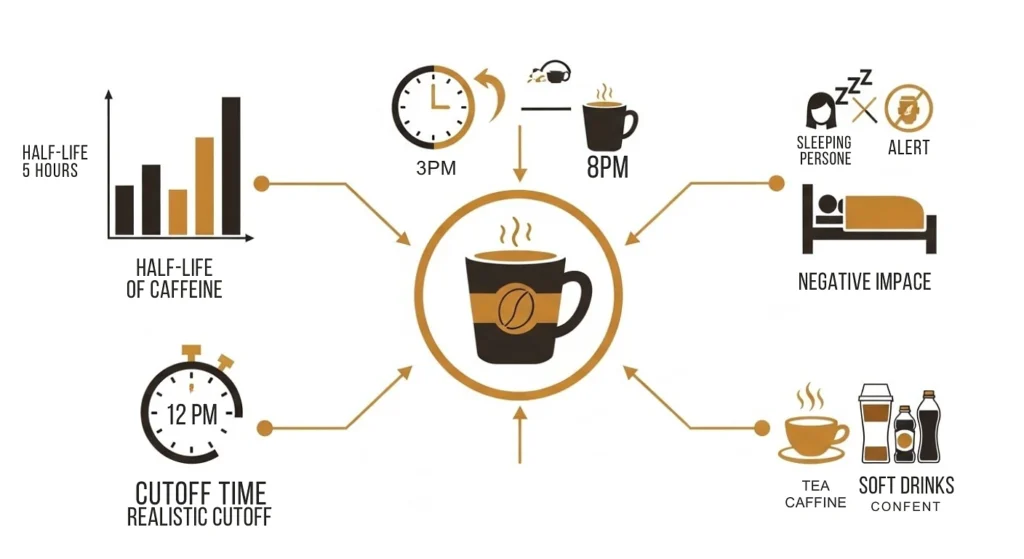
Caffeine has a half-life of approximately five hours in most adults. A strong coffee at 3 PM still has a meaningful amount circulating at 8 or 9 PM. For someone already dealing with elevated anxiety, that interference shows up directly in sleep onset.
Research published in the Journal of Clinical Sleep Medicine found that caffeine consumed even six hours before bedtime reduced total sleep time by more than one hour compared to a placebo.
Practical points that often get missed:
- Early afternoon is the realistic cutoff for most people with sleep difficulties.
- Individual metabolism varies those more sensitive to caffeine may need an even earlier cutoff.
- Tea, energy drinks, and certain soft drinks carry enough caffeine to produce the same effect and frequently get overlooked.
Alcohol Helps You Fall Asleep and Then Ruins the Rest
This one catches people off guard because the first part is genuinely true. Alcohol reduces sleep onset time which is exactly why it becomes habitual as a wind-down tool. What it does to sleep architecture afterward is the real issue.
Research published in Alcoholism: Clinical and Experimental Research established that alcohol suppresses REM sleep in the first half of the night and significantly increases sleep disruptions in the second half. Harvard Health notes it can also worsen snoring and breathing disruption during sleep.
Why this matters for mental health directly:
- REM sleep is the stage most critical for emotional processing and memory consolidation.
- Someone drinking regularly before bed may log eight hours and still wake completely unrestored the hours are there, the quality isn’t.
- Even moderate, habitual pre-bed use accumulates measurable damage to sleep architecture over time.
What the Bedroom Sleep Your Brain

The brain builds associations constantly, whether intended or not. A bedroom used regularly for work, stressful conversations, and late-night scrolling gradually loses its sleep association. This is not a minor behavioral quirk it is the core principle behind stimulus control in Cognitive Behavioral Therapy for Insomnia (CBT-I).
The American College of Physicians recognizes CBT-I as the first-line treatment for chronic insomnia, with clinical evidence showing it produces better long-term outcomes than sleep medication. Behavioral principles that matter most:
- Use the bed only for sleep working, scrolling, and watching from bed erodes the sleep association the brain depends on.
- If sleep hasn’t arrived within around 20 minutes, leave the bed rather than lying awake reinforcing wakefulness.
- Room temperature of 65–68°F (18–20°C) supports the core body temperature drop required for sleep initiation.
- Blackout curtains handle ambient light intrusion; white noise manages environmental sound — small adjustments that compound noticeably over weeks.