


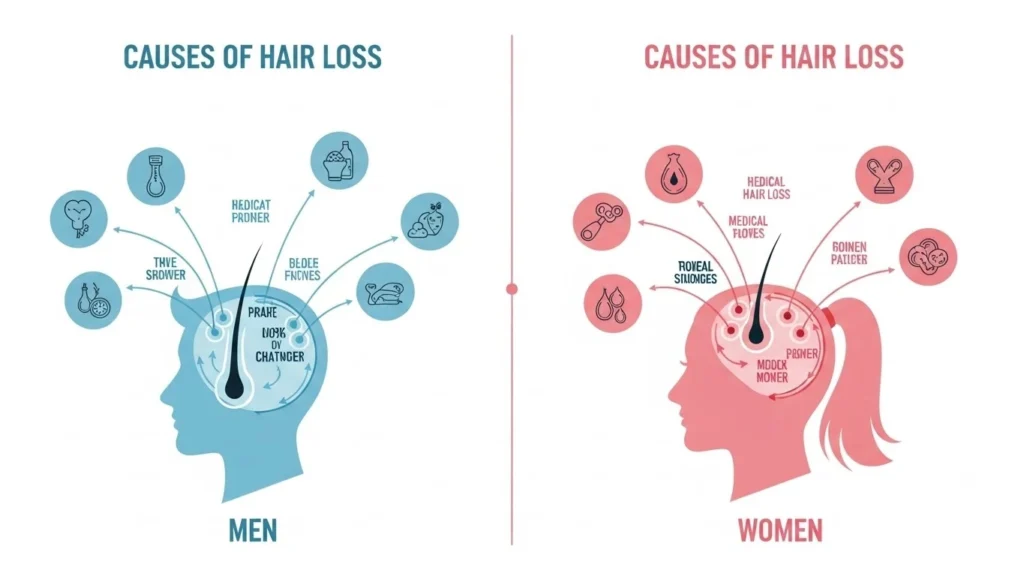
Hair loss, medically known as alopecia, is a common concern affecting millions of men and women worldwide. It can range from mild shedding to significant balding, and its impact often extends beyond appearance, affecting self-esteem and emotional well-being. Understanding the underlying causes is the first crucial step toward effective management and treatment. While some causes overlap between sexes, others are specific to biological differences.
Androgenetic Alopecia (Pattern Baldness)
The most frequent cause of hair loss globally is androgenetic alopecia, often referred to as male-pattern baldness or female-pattern hair loss.
- In Men: This condition is typically characterized by a receding hairline (forming an “M” shape) and gradual thinning at the crown. It is primarily caused by a genetic sensitivity to dihydrotestosterone (DHT), a potent derivative of testosterone. DHT shrinks hair follicles over time until they stop producing hair entirely. The pattern is usually predictable.
- In Women: In women, this type of hair loss presents differently, usually as a general widening of the center part or diffuse thinning all over the scalp, rather than distinct bald spots or a receding hairline. It is also linked to genetics and hormonal factors, though the role of DHT is less straightforward than in men.
Hormonal Changes and Imbalances
Hormones play a significant role in regulating the hair growth cycle. Fluctuations can trigger temporary or permanent hair loss.
- Pregnancy and Childbirth: Many women experience hair loss a few months after giving birth due to a drop in estrogen levels (telogen effluvium). This is usually temporary, and hair growth typically normalizes within a year.
- Menopause: Hormonal shifts during menopause can cause hair thinning in women due to a decrease in female hormones and a relative increase in androgens (male hormones).
- Thyroid Issues: Both an overactive thyroid (hyperthyroidism) and an underactive thyroid (hypothyroidism) can disrupt hormone levels and lead to hair thinning.
- Polycystic Ovary Syndrome (PCOS): This condition in women involves a hormonal imbalance that can lead to symptoms including hair thinning on the scalp and excessive facial/body hair growth.
Stress (Telogen Effluvium)
Significant physical or emotional stress can shock the hair growth cycle, pushing a large number of hair follicles into the resting phase (telogen) prematurely.
- Trigger Events: This type of temporary hair loss, known as telogen effluvium, often occurs several months after a major stressor, such as surgery, a severe illness (like COVID-19), rapid weight loss, or a personal trauma [1]. The hair often grows back once the stressor is managed and the body recovers.
Nutritional Deficiencies
A lack of essential vitamins and nutrients can impair hair growth and lead to shedding.
- Key Nutrients: Deficiencies in iron, protein, zinc, biotin, and vitamins D and B12 are commonly associated with hair loss.
- Dietary Impact: Crash dieting or restrictive eating habits can deplete the body of necessary building blocks for healthy hair follicles. A balanced diet is crucial for maintaining a healthy head of hair.
Medical Conditions and Medications
Several underlying health issues and treatments can cause hair loss.
- Alopecia Areata: This is an autoimmune condition where the body’s immune system mistakenly attacks healthy hair follicles, leading to patchy hair loss on the scalp and sometimes the body. It can affect both men and women at any age.
- Scalp Infections: Conditions like ringworm (tinea capitis) can invade the scalp and hair shafts, leading to scaly patches and hair loss.
- Medications: Certain drugs used for cancer treatment (chemotherapy), arthritis, depression, heart problems, and high blood pressure can cause hair loss as a side effect.
Hair Care Practices and Lifestyle
How you treat your hair physically can also cause breakage and loss.
- Hairstyles: Tight hairstyles like ponytails, braids, or cornrows can cause traction alopecia, a form of hair loss caused by constant pulling on the hair roots. If the pulling is chronic, the damage can become permanent.
- Treatments: Excessive use of heat styling tools, harsh chemicals, perms, and bleach can damage the hair shaft, leading to breakage.
Summary Table of Key Causes:
| Cause | Primarily Affects | Description |
|---|---|---|
| Androgenetic Alopecia | Men & Women | Genetic predisposition to hair thinning/balding patterns |
| Hormonal Changes | Women (mostly) | Pregnancy, menopause, thyroid issues, PCOS |
| Telogen Effluvium | Men & Women | Temporary shedding due to severe stress or illness |
| Nutritional Deficiencies | Men & Women | Lack of iron, vitamins, or protein in the diet |
| Alopecia Areata | Men & Women | Autoimmune condition causing patchy loss |
| Traction Alopecia | Men & Women | Damage from tight hairstyles |
If you are experiencing unexpected or significant hair loss, it is recommended to consult with a dermatologist or healthcare professional. They can accurately diagnose the cause and recommend appropriate treatment options, which may include topical medications like minoxidil, oral medications like finasteride, or lifestyle adjustments. Early intervention often leads to better outcomes.