


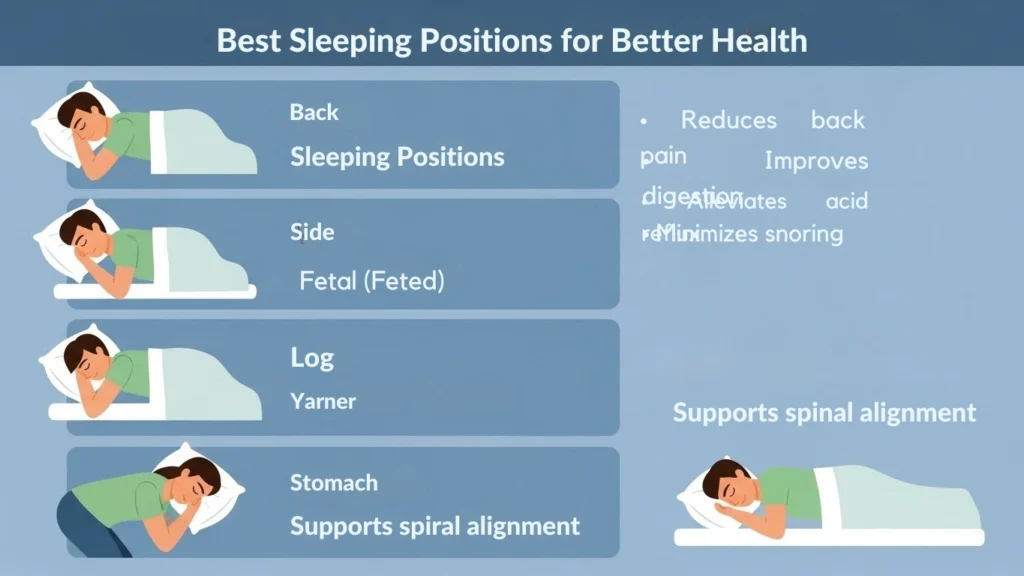
In 2026, sleep health remains a cornerstone of overall wellness. While many focus on getting “eight hours,” experts increasingly emphasize that how you sleep is just as important as how long you sleep. Your sleeping position directly impacts spinal alignment, digestive efficiency, and even respiratory health.
Side Sleeping The All Around Champion
Side sleeping is the most common position and is generally considered the healthiest for most adults in 2025. It is particularly effective tips for a healthier for keeping airways open and aiding the brain’s waste clearance process (the glymphatic system), which may help prevent neurodegenerative diseases.
- Best For: Snoring, sleep apnea, and acid reflux.
- The Left Side Advantage: Sleeping on your left side is superior for digestion. It uses gravity to keep stomach acid below the esophagus, significantly reducing heartburn and GERD symptoms.
- Pregnancy: The left side is also the gold standard for pregnancy, as it improves circulation to the heart and fetus while relieving pressure on the liver.
- Optimization Tip: Place a firm pillow between your knees to keep your hips, pelvis, and spine aligned.
Back Sleeping (Supine):
Lying flat on your back is often recommended for those without breathing issues because it allows the head, neck, and spine to rest in a neutral position.
- Best For: Preventing neck and back pain, and reducing facial wrinkles.
- The Downside: Gravity can cause the tongue and soft tissues to collapse toward the back of the throat, worsening snoring and obstructive sleep apnea.
- Optimization Tip: Place a small pillow or rolled towel under your knees to maintain the natural curve of your lower back and relieve pressure on your spine.
Fetal Position:
A relaxed curl on your side can provide relief for specific spinal conditions by opening up the space between vertebrae.
- Best For: Herniated discs or spinal stenosis.
- Caution: Curling up too tightly can restrict deep breathing and lead to joint stiffness or “tech-neck” like strain.
- Optimization Tip: Keep the curl loose and avoid tucking your chin into your chest to maintain airway openness.
Inclined Sleeping:
Elevating the head of your bed by 10 to 30 degrees either with a wedge pillow or an adjustable base is a key recommendation for 2025.
- Best For: Severe acid reflux, chronic snoring, and congestion.
- Benefits: This position uses gravity to prevent airway collapse and stop stomach acid from rising.
Stomach Sleeping:
Most experts strongly discourage sleeping on your stomach (prone). It flattens the natural curve of the spine and forces the neck to stay rotated at an extreme angle for hours.
- Only Benefit: It may reduce snoring in some cases, but at the cost of chronic neck and back strain.
- If You Must: Use a very thin pillow for your head (or no pillow at all) and place a thin pillow under your hips to help align your spine.
| Condition | Recommended Position | Pro-Tip |
|---|---|---|
| Lower Back Pain | Back or Side | Pillow under/between knees |
| Acid Reflux / GERD | Left Side / Inclined | Use a Wedge Pillow |
| Sleep Apnea / Snoring | Side | Avoid sleeping on your back |
| Pregnancy | Left Side | Use a Body Pillow for support |
| Neck Pain | Back | Use a Cervical Pillow |
| Preventing Wrinkles | Back | Avoid pressing face into pillow |
General Tips for Better Sleep Posture
- Pillow Loft: Side sleepers need thicker pillows to fill the gap between the ear and shoulder; back sleepers need thinner pillows to avoid pushing the head too far forward.
- Mattress Firmness: A medium-firm mattress is generally ideal for supporting the spine’s natural curve without causing pressure points.
- Inclined Sleep: Elevating the head of the bed by 6 inches can significantly help with acid reflux and congestion.
Final Thought
There is no “perfect” position for everyone; the best choice depends on your specific health needs and comfort. If you wake up with consistent pain or fatigue, consider transitioning to a side or back position using supportive pillows to bridge the gap until your body adjusts. Consult a specialist at the American Academy of Sleep Medicine if you suspect a chronic disorder like sleep apnea.